

 Available in US
Content
The Signal Most Punters Misread as Memory
Course form is the betting signal that gets misused more often than any other. The casual interpretation — “this player loves this course” — sounds plausible and feels true, but the underlying statistical relationship is more specific. Course form does not work because of mystical “feel” or psychological comfort. It works when a player’s specific skill profile maps onto a course’s specific scoring demands consistently enough that the historic pattern reflects an underlying competitive advantage.

England Golf recorded 5.75 million scores submitted through the World Handicap System in the first half of 2025 alone — a 29 per cent increase on the previous year’s equivalent period. The amateur-game data tells a broader story about how UK participation is growing, and Richard Flint, the chief operating officer at England Golf, framed it neatly: “Certainly the warmer weather this year has played a key role in more people getting out and playing more golf, but there are other important factors at play which are helping us to increase participation. Golf is appealing to a wider range of people.” A larger participation base means more people watching the pro game, more people reading betting markets, and more people misinterpreting course-form signals from the leaderboard data they see on Sky.
What follows is how course form actually works statistically, where it overlaps with recent form, the venue-fit clustering approach that produces sharper reads, and the three specific situations where course form misleads even the experienced punter.
Course Form vs Recent Form
The two metrics most punters reach for when reading a card are recent form (the last 5-10 events, usually weighted by recency) and course form (career performance at the specific venue, usually 5+ years of data). They measure different things, and the public-side market often weights one when the other matters more.

Recent form is a noisy short-window signal. A player who has finished T5, T2, T8 in the past three events looks elite by recent form, but the underlying confidence interval on “three events worth of finishes” is wide. The player could be a 7/1 favourite next week or a 30/1 longshot, depending on which model you trust to extrapolate from three data points.
Course form is a structurally different signal. Five years of finishes at a single venue captures roughly 20 competitive rounds (assuming the player made the cut in most years) — a larger sample than recent form. The catch is that course form mixes player improvement over time with venue-specific skill match. A 32-year-old player’s five-year course history includes their 27-year-old self playing under different conditions, and the historical pattern may not project forward cleanly.
Scottie Scheffler’s 2025 birdie-or-better rate of 25.78 per cent — the highest on tour — illustrates how recent form and underlying ability can compound. He is currently in the prime of his career, the recent-form numbers are elite, and his course form data at venues he has visited multiple times reflects that prime-career form heavily. For younger players still establishing themselves, course form data from years 1-3 of their career carries less predictive weight than course form data from year 5 onward.
The sensible weighting in my model: 60 per cent on trailing-13-event Strokes Gained, 25 per cent on course form (when 5+ years of data exists), 15 per cent on recent 5-event form. The exact weights vary by venue and player, but the proportions are stable.
Venue-Fit Clustering
The most useful refinement to course form is venue-fit clustering — grouping courses by the skill profile they reward, then evaluating player performance across the cluster rather than just at the specific venue.

The Augusta cluster includes venues that reward high-launch iron play and soft-greens approach work. Augusta itself is the canonical example; other cluster members include parts of TPC Sawgrass on specific holes, Muirfield Village, and a handful of Open venues in soft conditions. A player who has performed well at Muirfield Village historically is more likely than the random tour pro to also perform well at Augusta, because the underlying skill profile transfers.
The US Open cluster includes venues that reward iron-play precision under maximum pressure: Pebble Beach, Oakmont, Shinnecock, Winged Foot, and Pinehurst. Course form within this cluster is more predictive than course form at any individual venue, because the venues are individually rare in the calendar but collectively reward the same skill profile.
The links cluster includes The Open venues plus the Scottish Open at Renaissance Club and a handful of other links events. Players who perform well across the links cluster have a venue-fit signature that transfers — the wind, ground game, and risk-management skills required at links courses are specific and consistent across the cluster.
Course form layered on SG: Approach produces the sharpest combined read: take the SG: Approach trailing-13-event leaders, filter against course-fit clustering (does this player’s profile match the venue’s demands?), then rank against actual venue history. The top 8-10 names from this process are the actionable shortlist for any specific tournament.
Live Application of Course Form
Live betting introduces a temporal dimension to course-form reads. The player whose pre-tournament price reflected venue-fit assumptions can now be evaluated against actual round one performance — and the model can update whether the venue-fit signal is holding up in the current week.

The pattern in my notes: when a venue-fit favourite (a player with strong course form at the venue and matching SG: Approach skill profile) opens with a strong round one, the live outright price tightens rapidly, often more rapidly than the implied probability change warrants. Public-side money flows quickly into “this player loves this course, see, he’s playing well” — and the price compresses past the model probability.
The flip case is more interesting. A venue-fit favourite who opens with a poor round one (78, missing fairways, struggling with greens in regulation) gets faded by the public-side money sharply. The live price drifts longer than the underlying probability warrants, because the public is reading the bad round as “the magic didn’t work this year.” The trading desks know the underlying skill profile is unchanged across 18 holes, and the live model still rates the player’s chance of contending across rounds 2-4. The disciplined punter can find value in this fade.
The general rule: course form’s predictive value compresses across the four rounds of a tournament. By Sunday evening, course form has been fully overwritten by actual current-week performance. By Thursday evening, only 25 per cent of the course-form signal has been overwritten by current performance. The earlier the live entry in the tournament, the more weight course form deserves; the later in the week, the less.
Where Course Form Misleads
Three specific situations where course form misleads even experienced punters.
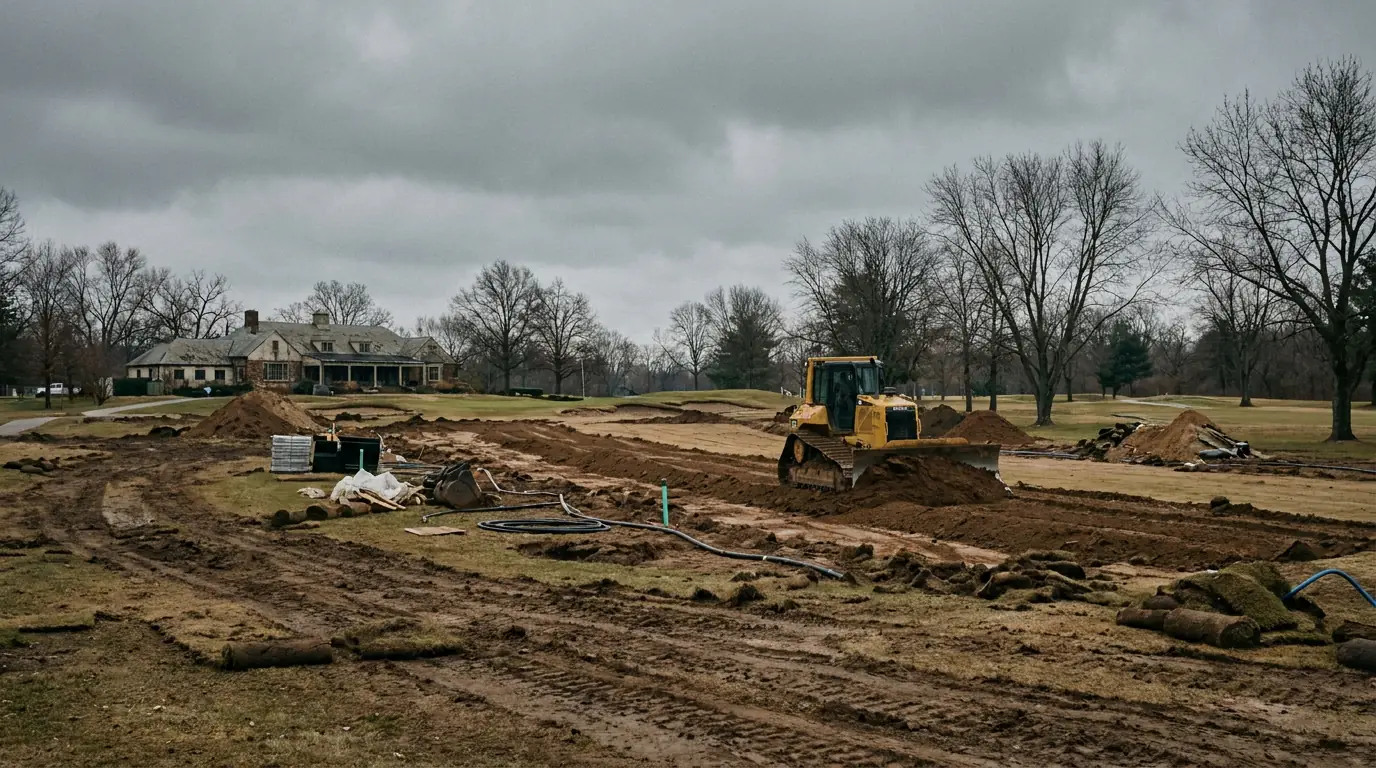
The first is the “old success” trap. A player who won at the venue in 2018 and 2019 but has had middling form there in 2022-2025 still shows positive course form in the headline statistics — three top-10s, two missed cuts, one win — but the trend within the data is deteriorating, and the underlying skill set may have shifted with age. Course form headline numbers do not show recency-weighted decay, but the predictive value does decay.
The second is the “small sample” trap. A player with only two tournament appearances at a venue can show “100 per cent top-5 course form” — but two data points is statistically meaningless. How many course iterations make course form statistically meaningful? In my model, four or more competitive appearances with a meaningful number of made cuts before the metric carries serious weight. Below that, treat course form as anecdote rather than signal.
The third is the “venue redesign” trap. Course renovations between visits (new greens complexes, lengthened tees, removed bunkers, repositioned hazards) can invalidate prior course-form data more than punters realise. The 2024 Augusta renovations to the 13th hole, for instance, changed the strategic decision-making on that specific hole materially; pre-2024 course form on Augusta carries small but real adjustments for players whose decision-making was specifically tied to the old 13th setup.
How many course iterations make course form statistically meaningful?
Four or more competitive appearances with a meaningful number of made cuts before the metric carries serious weight in my model. Below that threshold, treat course form as anecdote rather than statistical signal. The trading desks at major UK operators apply similar minimum-sample rules in their venue-fit weighting.
Does course form override SG: Approach in a live read after round 1?
No. By round one’s completion, only about 25 per cent of the course-form signal has been overwritten by current-week performance. SG: Approach trailing data still carries the larger weight in the live model. Course form supplements the SG-driven shortlist rather than replacing it.
