
 Available in US
Content
The Pause Most Punters Don’t Even Notice
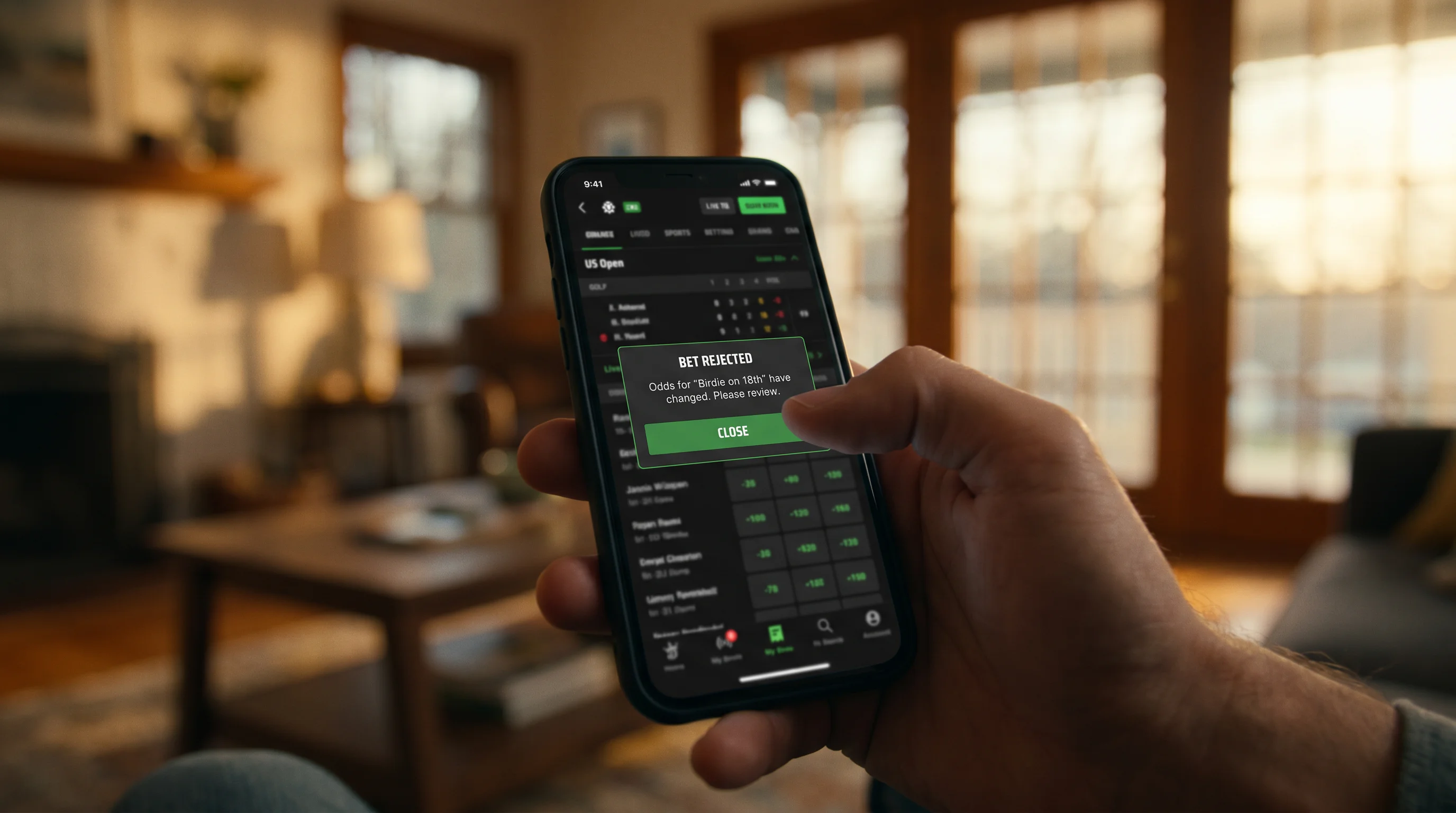
If you have ever tried to slam a £200 live wager into a UK golf market during an actual shot, you have probably watched the bet sit in a confirmation loop for nine seconds and then come back rejected with a polite “price has changed” message. That is the latency window — the seven to fifteen seconds during which the trading desk freezes the line because they cannot price a ball that is still in mid-air.
The between-holes window is the opposite of that. It is the 60 to 120 seconds when the ball is in nobody’s hand, the next shot is still being walked towards, and the live book is open and breathing. This is the only stretch of any live golf round where a non-trivial stake actually gets accepted at the price you see, and where you have time to think about it.
Live football accounts for five per cent of the UK gambling sample (nine per cent among men) and live horse racing follows on three per cent. Live golf is smaller still, which means the trading desks running it have fewer hands on deck and tighter rules about when the market is actually open. The between-holes pause is when those hands catch up. Once you understand what they are doing in that 90 seconds, you understand why your price moves the way it does.
Why the Window Exists at All
The simple answer is that golf is the slowest of the fast-priced sports. Every shot is a discrete event with a discrete outcome (in the cup, in the fairway, in the bunker, in a hazard), and the live model recalibrates after each one. Compare that with tennis, where the live model updates after every point in a continuous flow, or football, where the model has to track 22 players and a ball constantly.
Because each shot in golf changes the implied probability of every downstream outcome — outright winner, top-finish position, head-to-head, make-the-cut, even hole-in-one specials — the trading desk needs a moment of stillness to push the new numbers out to the public side of the book. That moment is the walk from green to tee, or from fairway to next shot.
The window also exists because UK regulation requires operators to honour the displayed price unless a clear material change has occurred. If they leave markets open during the shot itself, they risk having a stake accepted while the ball is in flight towards a definitive outcome. The 90-second between-holes window is partly a regulatory comfort zone for them and partly a recalculation buffer.
Typical Window Length and Why It Varies
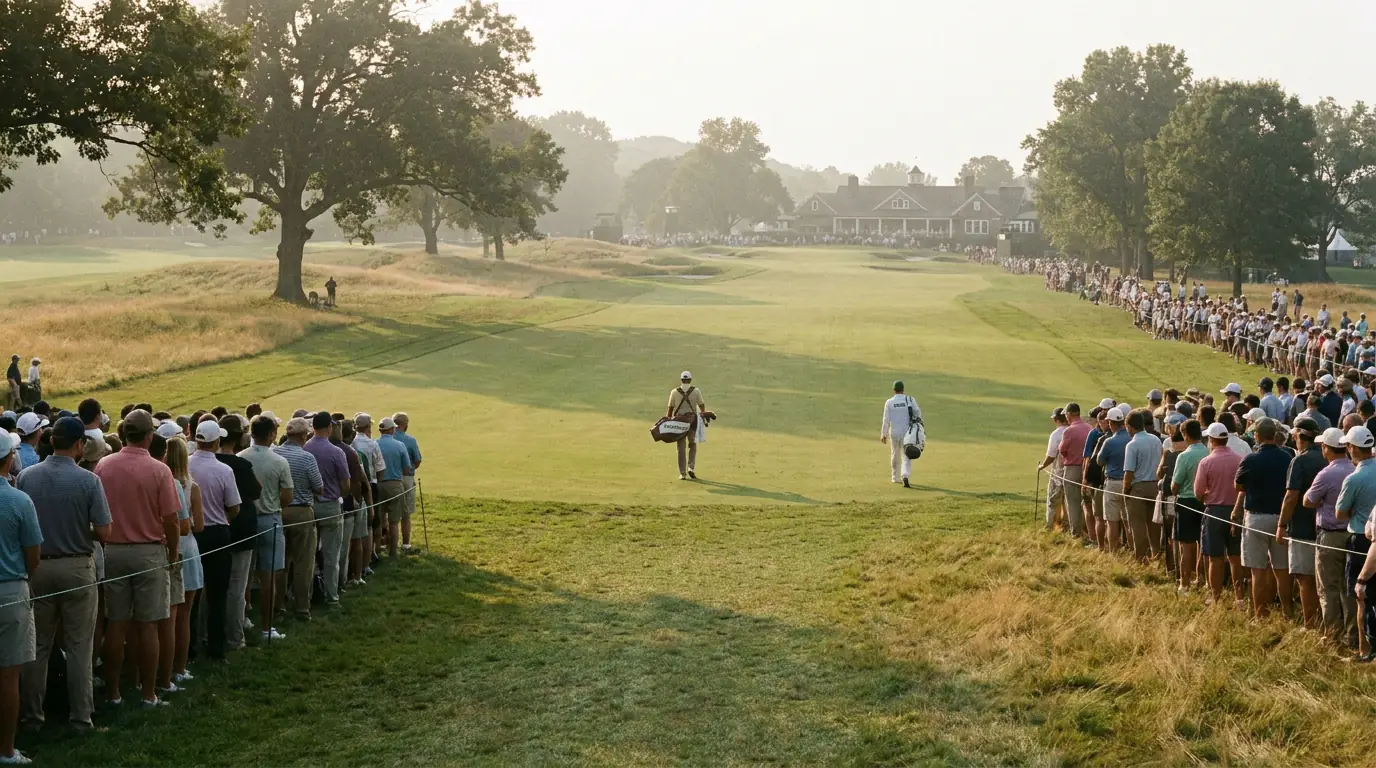
The walk from a par-4 green to the next tee on a tournament course typically takes 60 to 90 seconds for the players. On a par-3 to par-4 transition with a long walk-up (Augusta’s 4 to 5 is famously brutal), it can stretch to two minutes. Between consecutive shots inside a single hole, the window collapses to 30 to 45 seconds — fairway walks have shortened as average driving distance has climbed.
The average driving distance on the PGA Tour in 2025 was 303 to 304 yards, with leaders like Aldrich Potgieter pushing 327+ and the tour average growing 5 to 7 yards year on year. The practical consequence for between-holes liquidity is that pros are walking further between shots, and each shot is followed by a slightly longer recalculation window than it was three seasons back. Trading desks running models from 2023 baselines are now systematically a half-step behind on rapid leaderboard moves, because the geometry of the round has shifted under them.
Worth noting: weather delays, pace-of-play warnings and tee-time gaps extend the window unpredictably. A two-hour Friday rain delay does not give you a two-hour window — it gives you a closed market until the desks have rebuilt the model.
What the Books Are Doing in That Pause
From the trader’s side, the between-holes window is a four-step process. First, ingest the just-completed hole result (score, putts, GIR, fairways hit if relevant). Second, update the live model’s probability tree for every player in the field whose price is still active. Third, apply the margin layer — the bookmaker’s cut, typically four to eight per cent in golf, sometimes wider when leaderboard volatility is up. Fourth, push the new prices to the front-end and unlock the market.
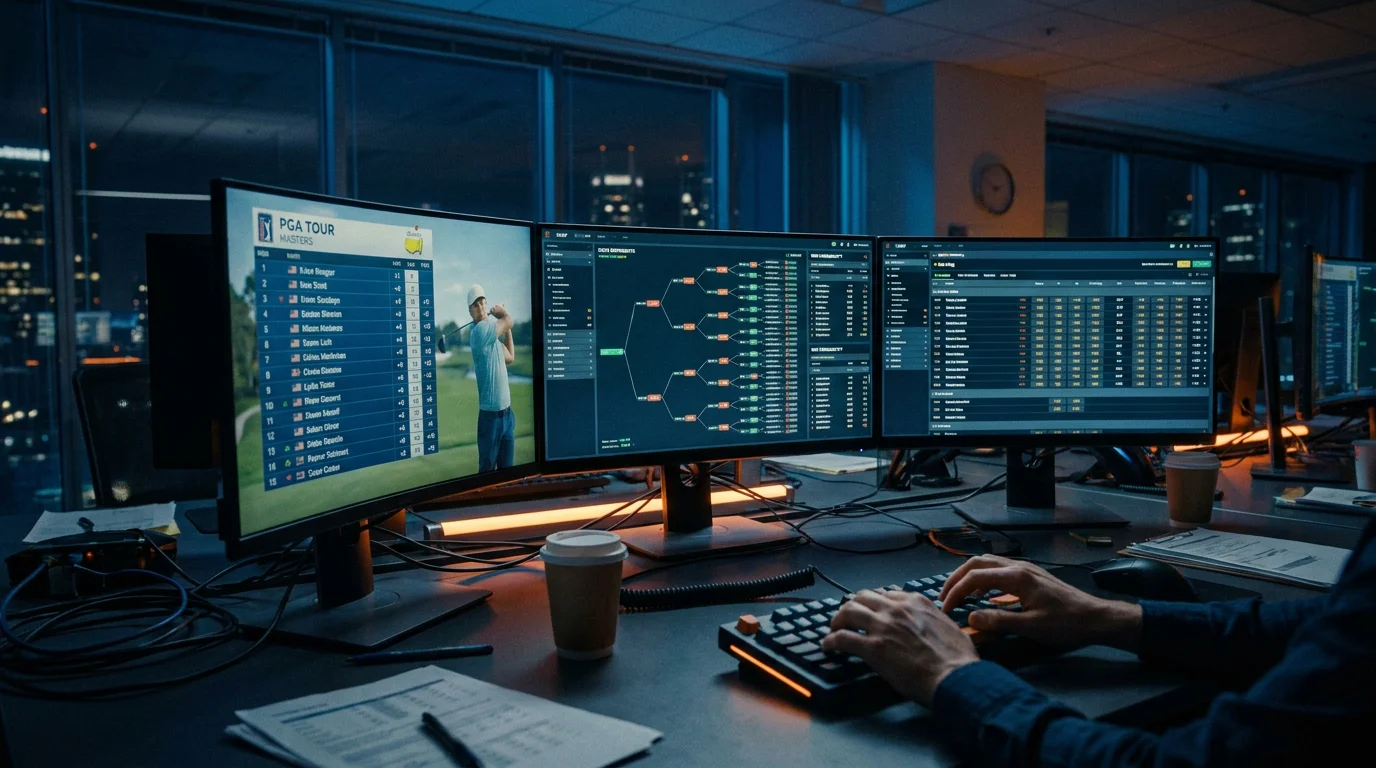
The whole sequence runs in 30 to 60 seconds for a competent desk on a major. Smaller events on the DP World Tour or a Korn Ferry tour stop can run slower, sometimes 90 seconds plus, which is why those markets can sit closed even when you can clearly see the player walking to the next tee.
This is the underlying recalc formula — the maths that turns Scottie Scheffler’s most recent green-in-regulation into a fresh outright number. Knowing the steps is what lets you predict, with reasonable accuracy, where the price is about to land before it lands. If the just-completed hole was a routine par for everyone in your selection, expect the price to barely move. If it was a birdie for your player and a bogey for the leader, expect a 15-25 per cent compression in your decimal odds in the next 30 seconds.
The reason books occasionally close a market entirely between specific holes (rather than just pausing it briefly) is usually that the trading desk needs longer than the walk allows. Augusta’s 11-12-13 stretch (Amen Corner) is the textbook case — markets across most UK books close from the moment a leader steps onto the 11 tee until they have signed for 13.
A Bettor’s Checklist for the 90 Seconds
Here is how I run the window when I have a live ticket open and a decision to make. Six items, in order, no exceptions.
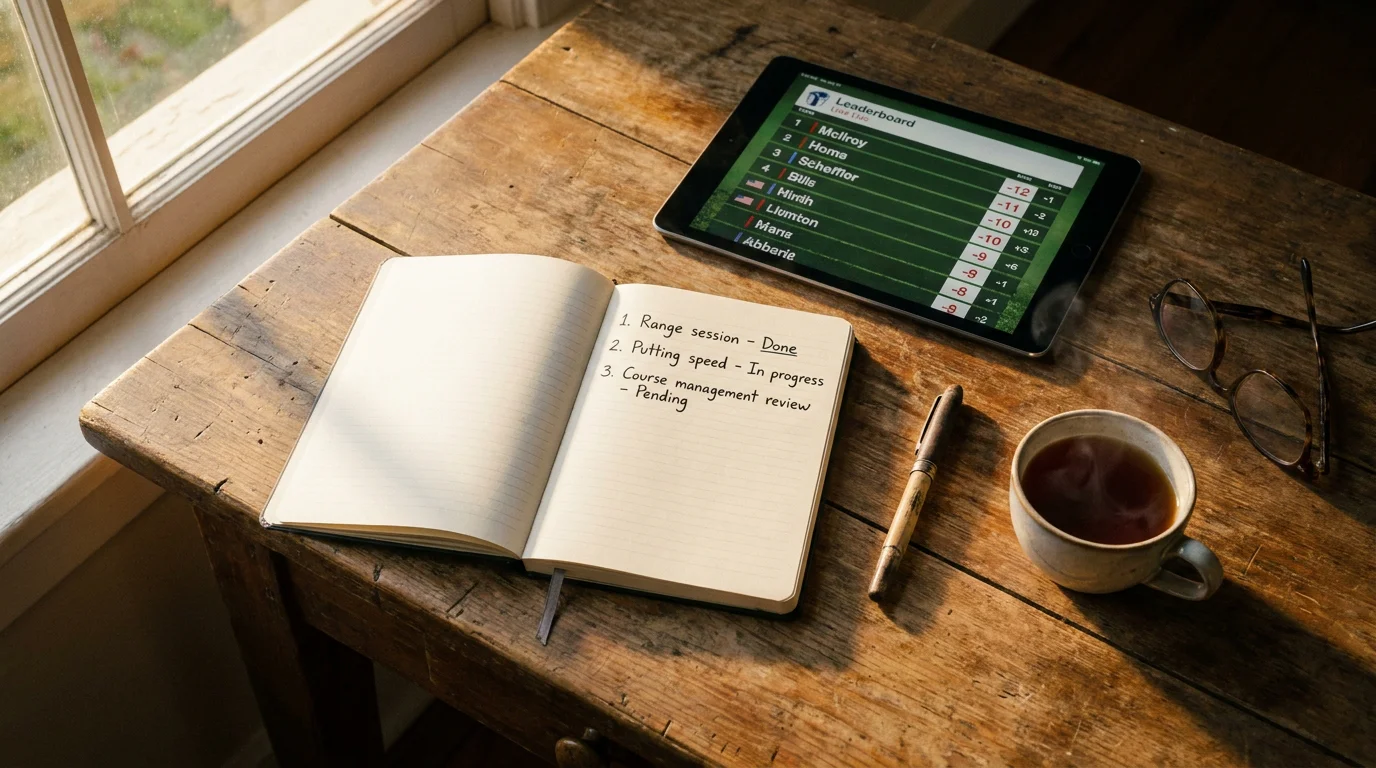
One: check the leaderboard for your player’s actual position before reading the price. Apps lag — sometimes the price moves before the leaderboard refreshes, which means the desk has new information you have not seen yet. If the price has shifted but the board has not, wait for both to align.
Two: check the next hole. Par-3? Par-5? Stroke index? A long par-5 with a reachable green changes the implied probability of a birdie. A short par-3 over water changes the implied probability of a double.
Three: check the wind, if you have it. On links and exposed parkland courses, a fresh gust read between the previous green and the next tee shifts every hole’s expected scoring by up to half a stroke.
Four: check the cash-out figure if you have one open. The between-holes window is the only stable point at which the cash-out value is not actively shifting under your finger.
Five: place the bet or close the screen. Do not place a bet you would not have placed 30 seconds earlier just because the market is open and the app is making it easy.
Six: log what you saw. The window is short, and the only way to learn from a sequence of decisions is to keep notes on what the price did, what the player did, and what you chose. Six months of notes is worth more than any model I have ever bought.
Why do some operators close markets entirely between specific holes?
Because the trading desk needs more time than the walk allows. Famous closures include Augusta’s 11 to 13 stretch and the closing holes of any tournament with a tightly clustered leaderboard. The desk would rather miss the action than push a price they have not finished recalculating.
Does the par-3 walkup pause behave the same as a par-4 fairway walkup?
Not quite. The par-3 walkup (tee to green) is shorter and the model has less recalculating to do because there is no fairway shot to ingest. Expect a 30 to 45 second window with smaller price moves. Par-4 and par-5 between-holes windows are longer and carry larger moves on average.
