

 Available in US
Content
The Variable That Decides More Live Tickets Than Any Other
I keep a separate notebook for links events. The reason is that wind data — direction, sustained speed, gust frequency, forecast accuracy — drives more of my actual trading decisions during The Open and the Scottish Open than any other input combined. Strokes Gained metrics matter. Course form matters. Recent putting numbers matter. None of them matter as much as a 22 mph crosswind on the par-3 8th of a wide-open Saturday afternoon.
Wind on a links course is not weather in the casual sense. It is a course-rewriting variable that turns a benign par-4 into a genuine bogey trap and a reachable par-5 into a layup hole. Single-round scoring at a links event swings 6-8 strokes between calm and windy conditions for the same player, and the live betting markets are constantly playing catch-up to a forecast that can shift faster than the trading desks can recalibrate.

The UK has been paying more attention to its links courses recently — Sporting Insights data showed 2025 produced a record number of rounds played in the country since their records began, up 14 per cent on 2024. More UK golfers means more punters who genuinely understand what an east wind does to the 6th at Carnoustie or a south-westerly does to the 7th at Royal Birkdale. The market is pricing into an increasingly informed audience, but the model gaps are still real, and they live in the live-pricing window between forecast updates and trader recalibration.
Prevailing Wind vs Forecast
Every UK links course has a prevailing wind direction — the direction the wind blows from most often based on historical climate data. Royal Portrush’s prevailing wind is south-westerly. St Andrews’ is south-westerly. Royal Birkdale’s is westerly. Royal St George’s is south-westerly. The prevailing direction shapes the course design — par-5 holes are typically routed to play downwind in prevailing conditions to provide birdie opportunities, while difficult par-4s are often routed into the prevailing wind.
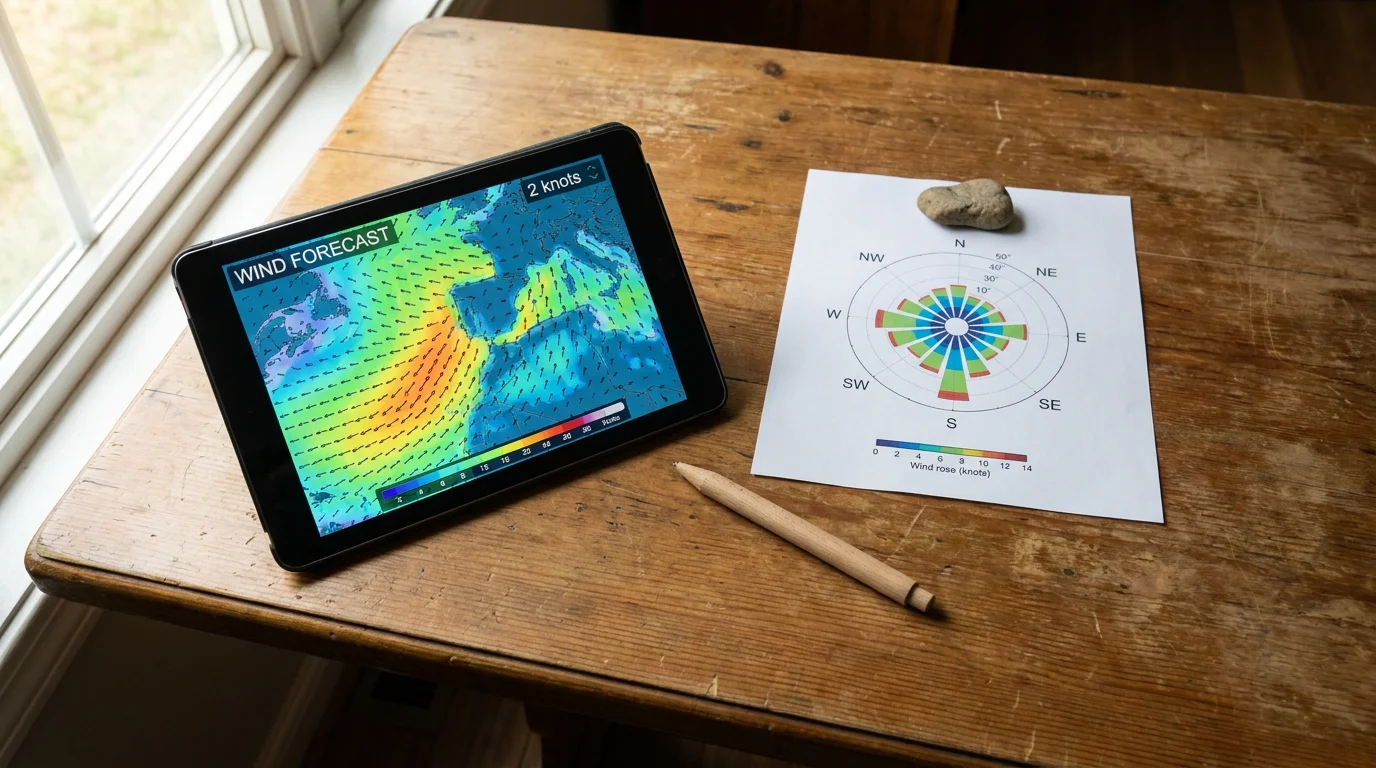
The forecast wind for any specific tournament round may match the prevailing direction or vary from it by 90 degrees or more. When the forecast matches the prevailing direction, the course plays “as designed” — par-5s reachable in two for the field, difficult par-4s genuinely difficult. When the forecast varies, the course plays differently, and every hole’s implied scoring distribution shifts accordingly.
The trading desks update their pricing models based on the 24-hour and 12-hour forecast updates from sources including the Met Office, the BBC, and tournament-specific weather feeds from Wenvoe and other local stations. The 12-hour-out forecast typically captures 70-80 per cent of the actual wind variance for the morning waves; the 6-hour-out forecast captures 85-90 per cent. Inside 3 hours, the forecast is essentially the real wind, give or take 2-3 mph and 10-15 degrees.
Does the forecast 12 hours before tee-off correlate with actual live odds movement? Yes, strongly. The pre-round price discovery cycles through three forecast updates (24-hour Wednesday evening, 12-hour Thursday morning, 6-hour Thursday afternoon) and the implied probabilities for individual players shift 10-25 per cent across the cycle when the forecast meaningfully changes between updates.
Hole-by-Hole Impact Mapping
The most useful pre-tournament preparation for any links event is a hole-by-hole impact map: for each hole, the prevailing wind direction relative to the hole’s bearing, and the implied scoring shift for the field under different wind directions and speeds.

A worked example using the par-3 8th at Royal Portrush (the 2025 Open venue). The hole plays approximately 200 yards in calm conditions, with the prevailing south-westerly putting the wind quartering from left-to-right and slightly off the back. Under a forecast 15 mph south-westerly, the hole plays effectively 188 yards (helping wind reducing carry requirement) — birdie probability for the field rises to roughly 18 per cent, bogey probability falls to 16 per cent.
Under a forecast 15 mph easterly (a reverse wind that pushes the ball into trouble on the right side of the green), the same hole plays effectively 215 yards into the wind and across the wind — birdie probability falls to 9 per cent, bogey probability rises to 28 per cent. The same hole, the same players, but a 90-degree wind shift produces a 50 per cent change in implied birdie probability and a 75 per cent change in implied bogey probability.
This kind of map exists for every hole on every links course in serious use, though most punters never build one themselves. The trading desks at the major UK operators maintain internal versions, and the pricing models reference them constantly. The disciplined punter can replicate a rough version by tracking five seasons of Open and Scottish Open scoring data on hole-by-hole basis and noting the score-to-wind correlation.
Live Odds During Gust Windows
Sustained wind speed is the variable forecasts handle well. Gust frequency and gust intensity are the variables that produce the most live-pricing dislocations. A forecast 15 mph wind with gusts to 30 mph plays substantially harder than a forecast 18 mph wind with gusts to 22 mph, even though the mean speed is similar.

The trading desks treat gust windows separately. When a gust event begins (typically a 5-10 minute window of elevated wind speed), the live markets for the players currently on holes most affected by the gust window are repriced or briefly suspended. The repricing happens in the between-holes window is when wind adjustments happen for the affected holes, and the price moves can be sharp — implied probabilities shift 8-15 per cent in single between-holes windows during peak gust events.
The punter who tracks live wind data (the BBC and Met Office both publish hourly wind speed and gust observations at most coastal sites) can sometimes anticipate trading-desk repricing by 1-2 minutes. The window is short, but it is real. Live entries placed in the moment before the trading desk has fully ingested a gust observation can capture genuine value, particularly on outright and top-finish prices for players whose remaining holes are most exposed to the gust direction.
The risk side of this is equally real. A live entry placed at the price you see, before the gust window has reached the player you backed, can lose value within 8 minutes if the gust pattern intensifies. Wind-driven live betting is high-variance even when the read is correct.
Historical Wind-Swing Examples Worth Knowing
The 2025 Open at Royal Portrush finished with Scottie Scheffler at -17, taking $3.1 million from a $17 million prize fund, with the cut line guaranteeing $38,900 to every player who survived 36 holes. The conditions across the four rounds were relatively benign, with sustained winds in the 10-15 mph range and occasional gusts to 20 mph — well within the historical comfort range for Open conditions.
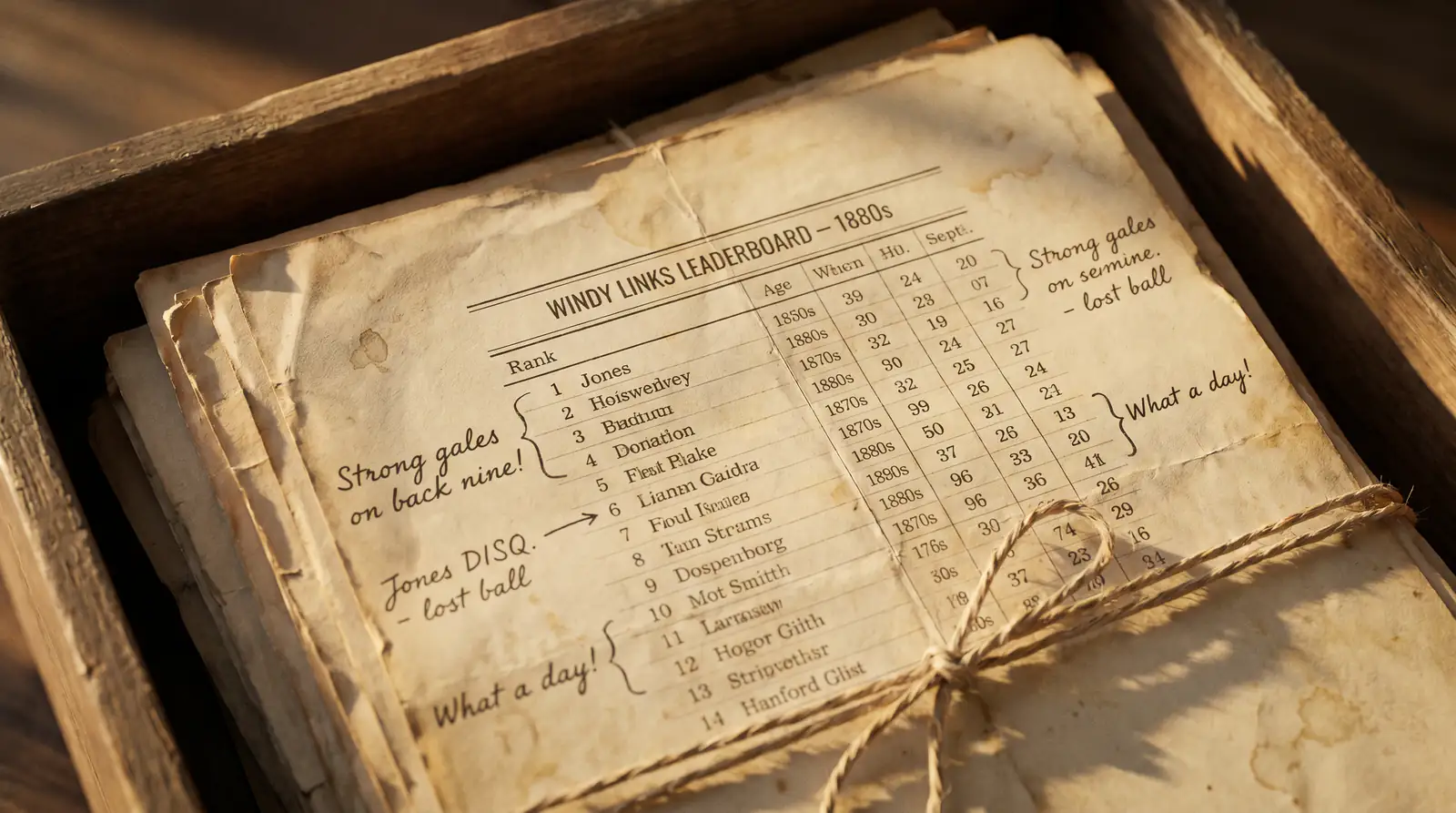
Compare that with the 2002 Open at Muirfield, where Saturday’s third-round storm produced gusts to 50 mph and a scoring average for the field of roughly +5 on the day. Players who had been priced at 8/1 for the outright on Friday evening (with implied probability 11 per cent) drifted to 25/1 to 40/1 by Saturday lunch (implied probability 3-4 per cent) as the wind reshaped every player’s likelihood of winning across the closing 36 holes.
The 2018 Open at Carnoustie produced a different wind-swing pattern: a calm Sunday morning that gave the chasing pack genuine scoring opportunity, leading to a final-round shootout where the live outright prices moved by 200-400 per cent for multiple players within the first two hours of round four.
These swings are the pattern, not the exception. Wind-driven implied-probability shifts of 50-300 per cent within a single round are normal at links majors. The live punter who reads wind data carefully and trades the between-holes windows with discipline can capture better-than-average value on these events. The punter who ignores wind data and relies on Strokes Gained alone is paying the difference between his model and the actual game being played.
How frequently do UK live operators adjust odds for wind shifts during The Open?
The major UK operators update their pricing models against the 24-hour, 12-hour, and 6-hour forecast cycles, then continuously through the round as actual wind observations arrive. Significant gust windows (5-10 minute periods of elevated wind) typically trigger market suspensions and repricing within 60-90 seconds of the observation.
Does the forecast 12 hours before tee-off correlate with actual live odds movement?
Strongly. The 12-hour-out forecast captures roughly 70-80 per cent of the actual morning-wave wind variance. The implied probabilities for individual players shift 10-25 per cent across the 24-12-6 hour forecast cycle when the forecast meaningfully changes between updates.
