
 Available in US
Content
- Why the Market Map Resets the Moment a Tournament Begins
- The Live Outright Market: Same Player, Different Product
- First Round Leader: Where Live Odds Go to Behave Badly
- Top Finish Markets and the Value of Counting
- Make the Cut: A Live Market That Closes Twice
- Head to Head and the Per-Hole Matchups
- Three-Ball, Group Winner and the Liquidity Question
- Props, Specials and the Numbers Nobody Calibrates
- Bet Builder Versus Singles on a Live Card
- Margin by Market: Where the House Earns Its Living
- Quick answers on live market depth and timing
Why the Market Map Resets the Moment a Tournament Begins
The moment the first tee shot of a tournament leaves the clubface, the market map you spent Tuesday and Wednesday studying becomes a different document. Forecast bets close. Outright fields are locked. New markets — hole props, between-holes prices, head-to-head matchups that did not exist on Wednesday — open in their place. The UK remote betting market generated £2.6 billion in gross gambling yield across the 2024 to 2025 financial year, with football pulling £1.3 billion of that and horse racing £766.7 million; golf sits well behind both, but the in-play product on golf is structurally richer than either because every shot in a four-day card is a candidate for its own market. That richness is what this piece maps.
What follows is not a glossary. A glossary tells you what a market is. I want to tell you how each market behaves once the tournament is live — which ones reset between rounds, which ones close at the turn, which ones the book runs at a fair margin and which ones it does not. I have lost decent money to the second category at least twice, and after seven years of trading live golf I treat the market menu the way I treat the leaderboard: a thing that needs reading, not memorising.
The order below is roughly the order of liquidity, with outright at the top and exotic props at the bottom. That order also tracks margins almost perfectly, which is the single most useful pattern in the whole map.
The Live Outright Market: Same Player, Different Product
The live outright is the deepest market on a UK golf card and the one most punters misuse. I keep coming back to the McIlroy Masters 2025 example because it is the cleanest illustration in recent memory: pre-tournament price of +650 implying about 13.3% to win, in-play price of +1200 after his opening 72 implying about 7.7%. Same name, same week, different product entirely. He went on to take the playoff and complete the career Grand Slam, the sixth man in history to do so, but the in-play product paid roughly 1.85 times the pre-tournament product because the underlying probability had moved.
What makes the live outright different mechanically is that it aggregates every shot from every player. When a contender bogeys, the entire field shifts: the leaders are priced shorter, the chasing pack drift slightly, the cut-bubble players almost stop existing on the outright board because the model is using its variance budget on the front of the field. The market is heavy, in the sense that small shocks barely move it. A single bogey from a leader rarely changes anything outside of the top three. A double bogey on a Sunday from the leader is a different event entirely — that is when the live outright market does its most violent re-pricing of the entire week.
The other useful pattern: live outright markets stay open through the cut. A player six over par after Friday morning is not coming back, but the book leaves a price up — usually +50000 or higher — to keep the market visible. That is not a value opportunity; that is the book honouring its menu. The actual edge on a live outright is almost always between Friday afternoon and Saturday lunchtime, when the field has shrunk to roughly 60 to 70 players and the price differences between positions three through ten are still meaningful. By Sunday morning the top three are usually shorter than their realistic probabilities; by Sunday afternoon the front pair are usually overpriced because the book has been hedging into them for two days.
If you only ever trade one live golf market, this is the one to learn. Everything else on the card behaves like a derivative of it.
First Round Leader: Where Live Odds Go to Behave Badly
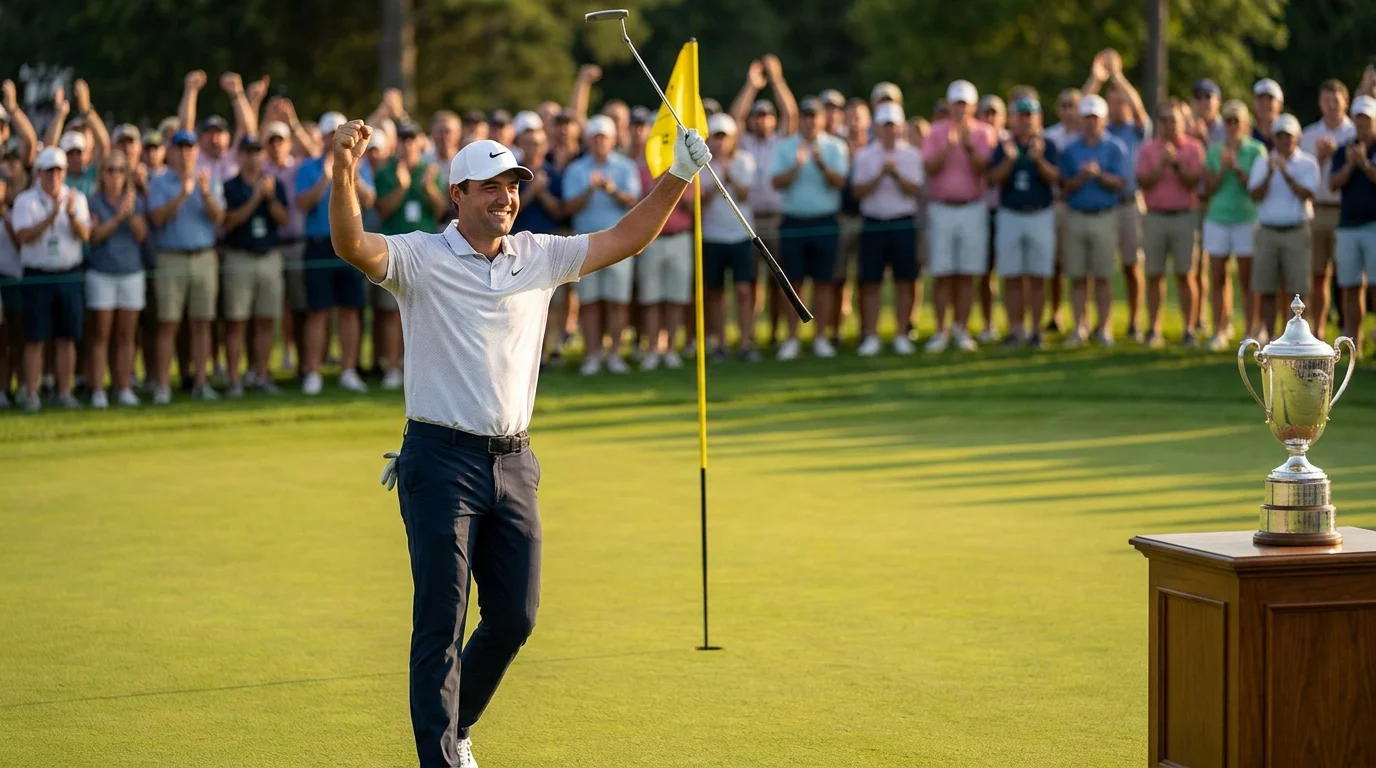
The first round leader market lives for about five hours, behaves like a meme stock, and closes before most punters have read the morning forecast. I have a soft spot for it because it is the most behaviourally inefficient market on the card — and a hard rule of never staking more than I would on a horse in a maiden, because the variance is genuinely enormous.
The structure of the market is what makes it strange. First round leader is settled the moment the last group walks off the eighteenth green on Thursday. If two players share the lead, dead-heat rules apply and your stake is halved. If three share the lead, divided by three. Yet the in-play market is priced almost entirely against win probability, with the dead-heat scenario buried in the small print. On a typical Thursday, you can be backing a player at +1800 to lead a field of 156 after a single round, knowing perfectly well that ties are not just possible, they are common — roughly one in three majors finish round one with a shared lead.
The in-play version moves on a different rhythm than the outright. A player one shot off the morning lead in the late afternoon, with three holes to play, can be priced at +800 to lead. The same player making birdie at the sixteenth and walking onto the seventeenth tee tied with the morning leader is suddenly +250. Half an hour. Two prices. The market expects you to keep up.
I trade this one only when I have a clean read on a single player and I am willing to take the dead-heat haircut as a known cost. Otherwise it is entertainment.
Top Finish Markets and the Value of Counting
Top-five, top-ten and top-twenty markets are the workhorses of a competent live golf bettor, and they reward people who can count better than they reward people who can predict winners. The reason is that finishing positions are a structural feature of the field, not a single dramatic event. Across a 72-hole tournament, ten of any given 156-player field will finish in the top ten. The price you are taking is on the identity of those ten, not on whether the slot exists.
The 2025 Open at Royal Portrush is the example I use when I am teaching this to someone new. Total purse of $17 million, Scottie Scheffler winning at 17 under for the $3.1 million top prize, and the cut-line guaranteeing every player who made the weekend at least $38,900. Inside that field, the top-ten positions paid out across a long, gentle gradient. A live top-ten bet on a player sitting fifteenth on Saturday morning with two rounds to play is not asking for a miracle; it is asking for five players to make a mistake. Five players, two rounds, in a field where Strokes Gained variance is enormous. That is a fundamentally different question than asking one player to win the trophy.
Where these markets get interesting in-play is the second cut moment — the move from sixteenth to fifteenth, or from eleventh to tenth. Outright markets barely flinch at those moves. Top-ten markets sometimes step a full tier. If you are sitting on a top-ten ticket that has just moved into the top ten on a Saturday evening, that is the moment to consider whether the cash-out price is fair. I usually find it is not, but the question is worth asking on every single bet.
Make the Cut: A Live Market That Closes Twice
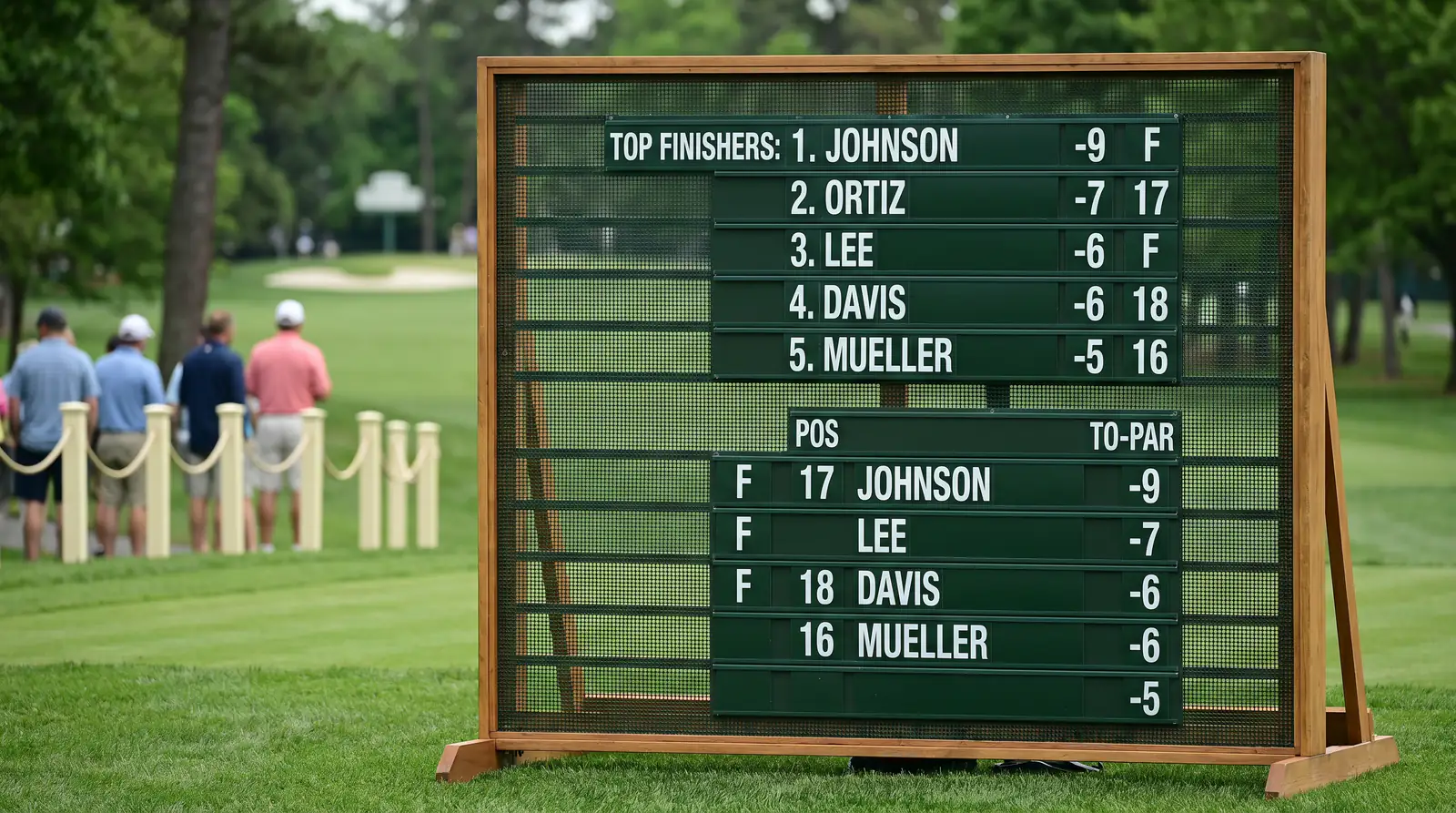
Make-the-cut is the market that closes twice and therefore lives twice. It opens at the start of the tournament, runs through Thursday and into Friday afternoon, and settles when the cut number is officially confirmed by the tour. But within that window, the market re-prices wildly because the cut number is not knowable until the last group walks off Friday’s eighteenth.
On the Open at Portrush, the cut fell where most observers expected and the guaranteed payout for making the weekend was that $38,900 cheque. From a market-maker’s perspective, that hard-money floor matters: it forces every player still alive on Friday afternoon to play conservatively, which compresses the variance and makes the cut number more predictable than the outright winner. The book knows this. The book prices accordingly.
The window where make-the-cut markets misprice is Friday morning into early afternoon, when half the field has finished round two and half has not. The implied cut line is moving by half-shots every twenty minutes. A player on the projected cut line at 11am can move to two clear of it by 1pm without striking a shot, simply because the late-starting wave has hit a wind shift. If you can read the projected cut line in real time against the player’s score, there is genuine edge here — particularly on the borderline names where the book is hedging both directions and the margin sits wider than the rest of the card.
Head to Head and the Per-Hole Matchups
Head-to-head and matchup markets are the cleanest probability product in live golf. Two players, one round, one winner — almost binary, almost fair. I say “almost” because the book still takes a margin, and the margin on a tournament-long head-to-head is usually wider than on a single-round head-to-head, which is itself wider than on a single-hole head-to-head. The shorter the matchup, the tighter the margin tends to be, because the book has less variance to hedge against.
Where this market becomes interesting in-play is during round play, when the book offers head-to-head re-prices after every hole. A player who started a round at +110 to beat his playing partner over eighteen holes can be at -200 after a four-hole birdie streak, or at +400 after dropping a double at the second. Those re-prices are the book actively hedging its exposure on the original line, and they are usually tighter to true probability than the outright market on the same player.
The trade I look for here is the player who has just shaken off a bad start. Books over-correct in the first hour of a round — a player who bogeys the first two holes will drift further on the head-to-head than the underlying data justifies, because the model is putting weight on early-round form that has not yet accumulated. Catch that drift before the third hole, and you are buying a price that has already started to move back in your favour.

Three-Ball, Group Winner and the Liquidity Question
Three-ball markets — pick the lowest score across one round in a three-player group — are a UK speciality, and they are the market where I see the widest range of behaviour between operators. Some books keep three-balls open all the way to the last putt of a round. Others close them at the turn or after the fifteenth. The difference matters: a three-ball that closes at the turn is a different product than one that runs to the eighteenth, and you need to know which version you are buying before you place the stake.
Group winner is the natural extension to four-ball, five-ball and “six shooter” markets that some UK books carry. The maths is the same: pick the lowest single-round score from a defined group of players. The margin tends to widen with the number of players in the group, because the book is hedging more potential winners, and the price you are getting reflects that.
The in-play behaviour of these markets is dictated almost entirely by group construction. A three-ball with two contenders and one no-hope is not really a three-ball; it is a head-to-head with extra variance. A three-ball with three contenders is the real product, and the prices tend to stay competitive deep into the round because no clear favourite establishes itself. I keep a small subset of three-balls on my screen during major weeks specifically because of this — the prices are honest, the variance is contained to four hours, and the settlement is unambiguous.

Props, Specials and the Numbers Nobody Calibrates
Props are where books make their margins on golf, and I say that with no judgement — the prop market is paying for the rest of the card. Hole-in-one specials are the headline example. The actual probability of a hole-in-one on a single par-3 for a PGA Tour professional is roughly 1 in 3,000; for a low-handicap amateur, about 1 in 5,000; for a recreational amateur, around 1 in 12,500. UK books typically price hole-in-one specials around the +5000 to +8000 range for “any player in the field” across the tournament — and given there are roughly 280 par-3 attempts per round across a major field, the implied book probability sits very close to what the maths actually suggests, with a healthy margin layered on top. If you want to push deeper on this, I have written out the maths behind hole-in-one specials in its own piece, including the field-size adjustments most punters never apply.
Beyond hole-in-ones, the prop card runs the gamut. Top British player, lowest round of the tournament, will any player shoot a 59, total number of eagles, number of double-digit overnight leaders, will the eventual winner come from the morning wave on Thursday — each of these is a model the book has built, calibrated against historical data and stacked with a margin. Some of those models are tight; some are not. The pattern I have noticed: the more exotic the prop, the less likely the book has calibrated it against in-play data, and the more likely the price moves dramatically once the tournament begins.
This is the section of the menu where I do most of my work outside of major weeks. Quiet DP World Tour events and smaller PGA Tour fields have prop boards that read like they were copy-pasted from last year and have not been updated for course conditions. That is where the standing instruction in my notebook says: read every prop, even the boring ones.

Bet Builder Versus Singles on a Live Card
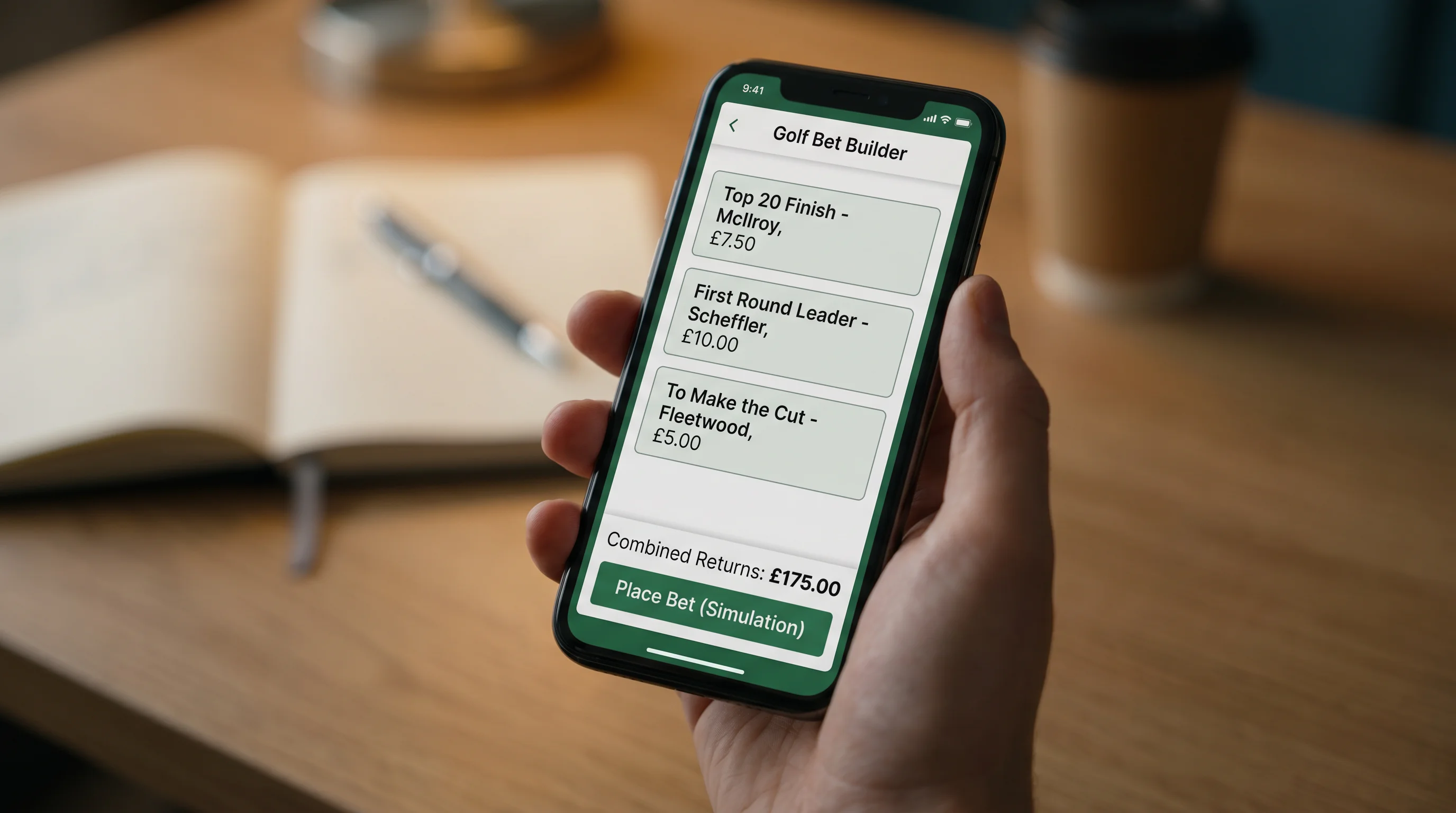
The bet builder is the most heavily marketed product in UK golf betting, and it deserves a careful look because the maths inside it differ from a regular accumulator in ways the marketing language does not explain. The headline difference: a bet builder applies correlated probabilities, an accumulator applies independent probabilities. In theory, that means a builder should be cheaper than the equivalent accumulator on correlated legs. In practice, the book applies its margin on each leg and on the combination, and the cheapness disappears under the layered take.
I run the comparison in my notebook every time I am tempted by a builder. Take a builder of two legs on the same player — to make the cut and to finish top twenty — and you will find the implied probability multiplied against the explicit builder price gives you a margin around 10 to 14% on most UK books. A single on the top-twenty leg alone runs a margin around 5 to 7%. You are paying double the take to bundle a leg that is almost automatically true if the second leg is true. That is not a deal.
Where builders earn their keep: legs that the book has scored as independent when they are quietly correlated. A first-round leader leg plus a top-five finish leg for the same player, for example. The book treats those as independent in its margin calculation, but the conditional probability of a top-five given a first-round lead is materially higher than the unconditional top-five probability. That is the kind of mispricing that justifies a builder. The rest do not.
Margin by Market: Where the House Earns Its Living
I keep a running spreadsheet of approximate margins by market across the UK books I trade, refreshed every major week. The numbers shift over time, but the order rarely does. Outright winner runs the tightest margin, usually around 4 to 6%. Top-five and top-ten finish run slightly wider, 5 to 8%. Head-to-head single round is 4 to 5%. Three-ball is 5 to 7%. Make-the-cut is 6 to 8%. Group winner (four or more players) is 7 to 10%. First round leader is 8 to 12%. Bet builders, depending on legs and correlations, run 10 to 14%. Specials and props, especially exotic ones, can run 15 to 25%.
That hierarchy is the most useful single piece of information in the entire piece. If you understand it, you understand why the books push some markets harder than others, why the cash-out price on a prop bet looks worse than on an outright, and why the bet builder banner sits above the head-to-head menu on every UK app.
Pamela Maldonado put the bettor side of this very plainly: “Golf betting is a slow-burn panic. Throwing darts at the board and hoping for a bullseye is a good way to run out of funds before the weekend. And if you’re putting the same amount on everything, stop right now — that’s the equivalent of using a putter from the fairway.” The margin hierarchy above is the structural reason that line is true. If you are flat-staking across markets with margins ranging from 4% to 25%, you are subsidising the high-margin bets with your edge on the low-margin ones. The cure is not to bet less. It is to size each market against its margin, and to read the menu like a price list, not like a list of options.
The map is the territory only if you treat it that way. The market menu on a UK live golf card is not “what you can bet on.” It is “what the book has decided to sell you, at what price, with what margin, on what settlement rules.” Read it that way and the in-play product turns into something close to a real marketplace. Read it the other way, and the cards play themselves.

Quick answers on live market depth and timing
Which live golf markets have the lowest bookmaker margin in the UK?
Outright winner and single-round head-to-head markets run the tightest margins on most UK books, typically 4 to 6%. Top-five and top-ten finish markets are next at 5 to 8%. The widest margins sit on bet builders, exotic props and first round leader markets, which can run 10% and above.
Are live outright markets still available once a player goes 3-over after the first nine?
Yes — UK books keep the outright board visible for almost every player in the field through the cut. The price will be wide, often +50000 or higher, reflecting the realistic probability. That visibility does not signal value; it signals the book honouring its full market menu.
Why do some 3-ball markets stay open until the last putt while others close at the turn?
It comes down to operator policy and exposure. BetVictor, for example, is known for running three-balls deep into rounds, while several other UK books close the same market at the turn or after the fifteenth. Closing earlier limits the book’s variance on a market where any of three players can swing the result with a late birdie. Always check the rules tab before staking.
