

 Available in US
Content
The Lottery Tickets Disguised as Betting
I once watched a £2 albatross ticket at 500/1 turn into a £1,000 winner on the Sunday afternoon of a 2017 European Tour event when a relatively unknown player holed his second shot on a 530-yard par-5. The friend who placed the ticket genuinely thought he had cracked the code, and spent the next 18 months placing the same bet at every event and losing every time. The single hit funded most of the losses, and he eventually broke even at a 70-per-cent margin to the bookmaker.

Albatross and condor markets are the rarest events in golf betting and the most aggressively priced. The base rates are extreme: roughly 1 in 1,000,000 for an albatross and an estimated 1 in 6,000,000 for a condor, per assessments by the USGA’s former Handicap Department director Dean Knuth and tracking from the Double Eagle Club. Against those numbers, the typical bookmaker price of 250/1 to 500/1 on “any albatross this tournament” looks generous in the way that buying a Lotto ticket looks generous. The maths underneath says otherwise.
For context, the hole-in-one rate is dramatically more common — roughly 1 in 3,000 for a PGA Tour pro per par-3 attempt, against the albatross at 1 in 1,000,000 — and the betting market reflects the gap. What follows is the actual maths, where these markets get listed, and whether any of them ever return positive expected value to the punter.
The Albatross Base Rate, Explained Honestly
An albatross (also called a double eagle) is a score of three under par on a single hole: a 1 on a par-4 (very rare), or a 2 on a par-5 (the much more common version). The base rate combines the probability of a tee shot landing in position to attempt the green in regulation minus two, the probability of the second shot reaching the green at all, and the probability of that ball going in the hole.
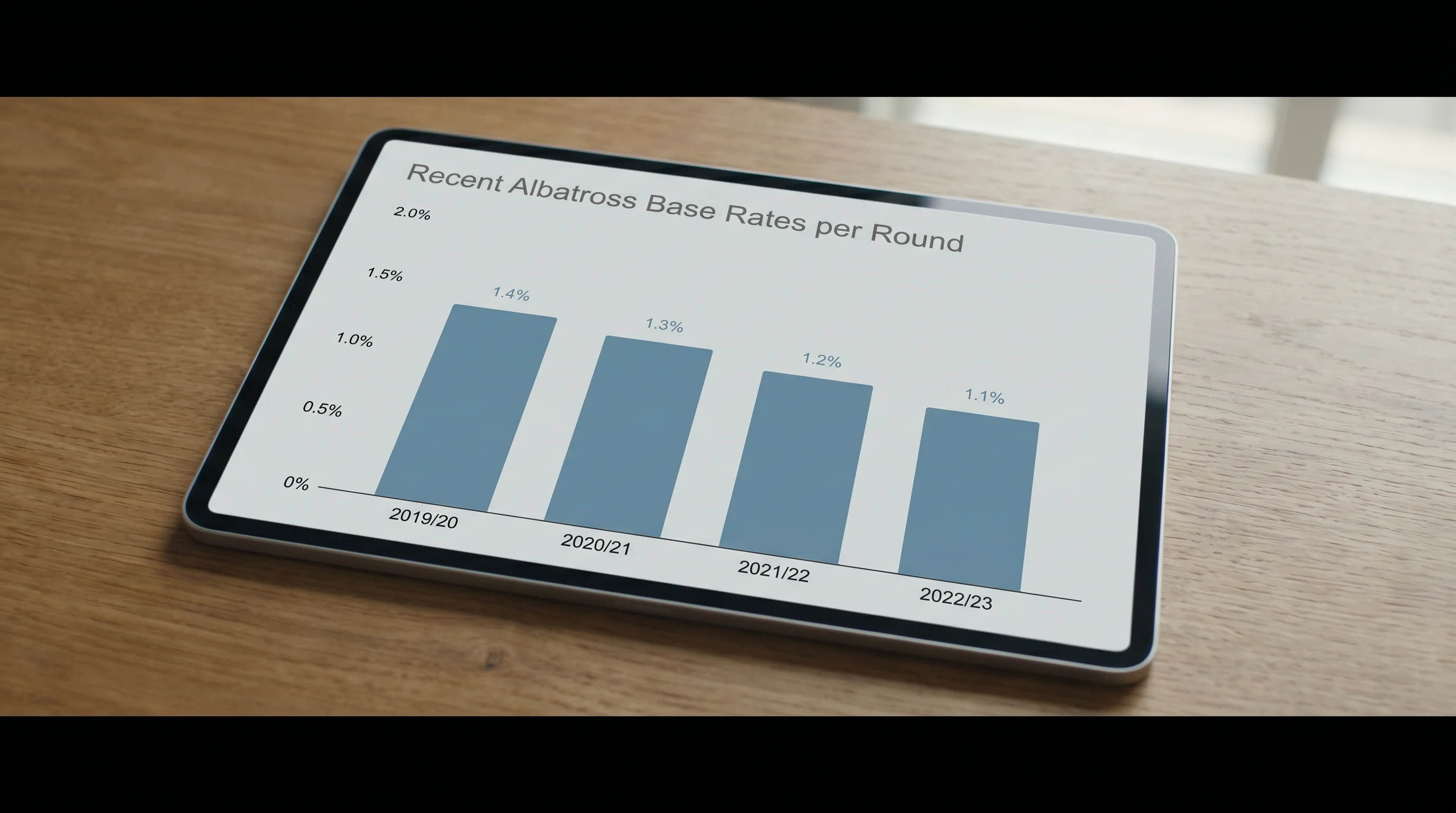
Dean Knuth’s estimate puts the albatross probability at roughly 1 in 1,000,000 for any given hole, with the Double Eagle Club’s analysis suggesting closer to 1 in 6,000,000 for the rarer condor (4 under par on a single hole, almost exclusively occurring as a 1 on a par-5 or theoretical 2 on a par-6).
To put this in tournament terms, a PGA Tour event with 156 starters, four rounds, and roughly four par-5s per round produces 156 × 4 × 4 = 2,496 par-5 attempts across the week. At the 1 in 1,000,000 base rate, the expected number of albatrosses per tournament is approximately 0.0025 — meaning roughly one albatross per 400 tournaments at the season-wide rate. Major tournaments historically have produced 12-15 albatrosses across their entire combined history.
The probability of “at least one albatross in a single tournament” is therefore approximately 0.25 per cent, or 1 in 400. Fair decimal odds: 400. The bookmaker price of 250/1 to 500/1 (decimal 251-501) is therefore very close to fair value at the long end and substantially overpriced at the short end — a 250/1 quote on “any albatross” is roughly 60 per cent margin against the true probability.
Condor and Rarer Still
The condor is one stroke harder. A score of four under par on a single hole means a hole-in-one on a par-5, or theoretical 2 on a par-6 (par-6 holes exist at a handful of resort courses and are not used in professional tour events). The condor is more often a 1 on a par-5 — a tee shot that finds the cup over 500+ yards.
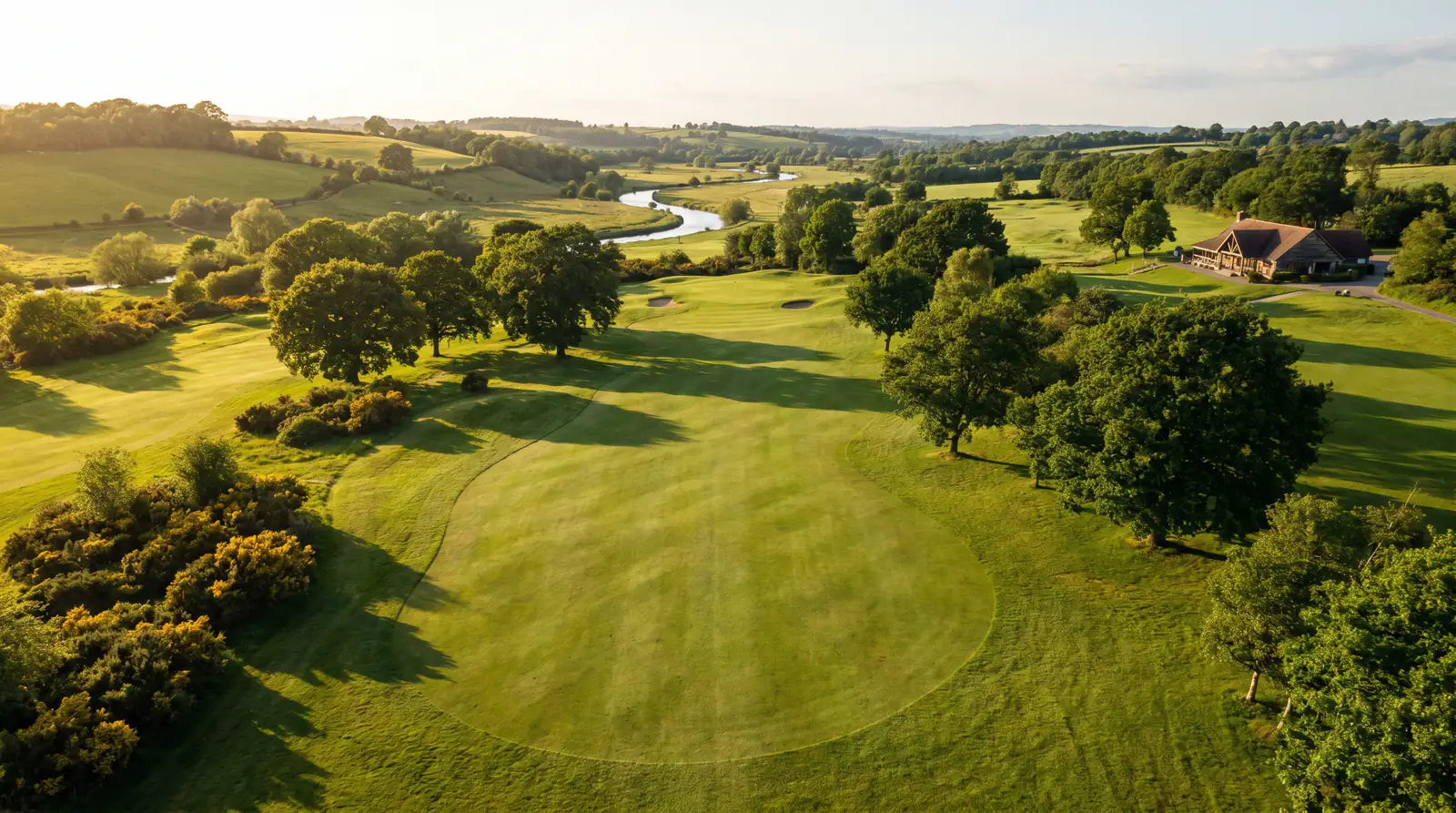
Documented condors in professional golf history are vanishingly rare. The verified count across all professional tours combined sits at approximately 5-7, depending on which historian’s records you trust. Some of these involved deliberately cutting tee-to-cup distance through specific course routings (a dogleg with a viable shortcut over trees, for instance), making the condor possible if not probable.
The implied probability at the 1 in 6,000,000 base rate, across the same 2,496 par-5 attempts at a major, is approximately 0.00042 per cent — or about 1 in 240,000. The bookmaker price on “any condor” at the rare events where it is listed runs from 1000/1 to 10,000/1, depending on how aggressively the operator wants to limit exposure.
The fair price at 1 in 240,000 is decimal 240,000. The 1000/1 quote is therefore a 99.5 per cent margin to the bookmaker, and even the 10,000/1 quote is a 95 per cent margin. There is no honest expected value in placing this market at any displayed price an operator has ever quoted in my notes.
Where Bookmakers List These Markets
Albatross specials are listed by a handful of UK operators at majors and at high-profile European Tour events. Condor specials are rarer — listed only at the four majors at most operators, and not at all at some.
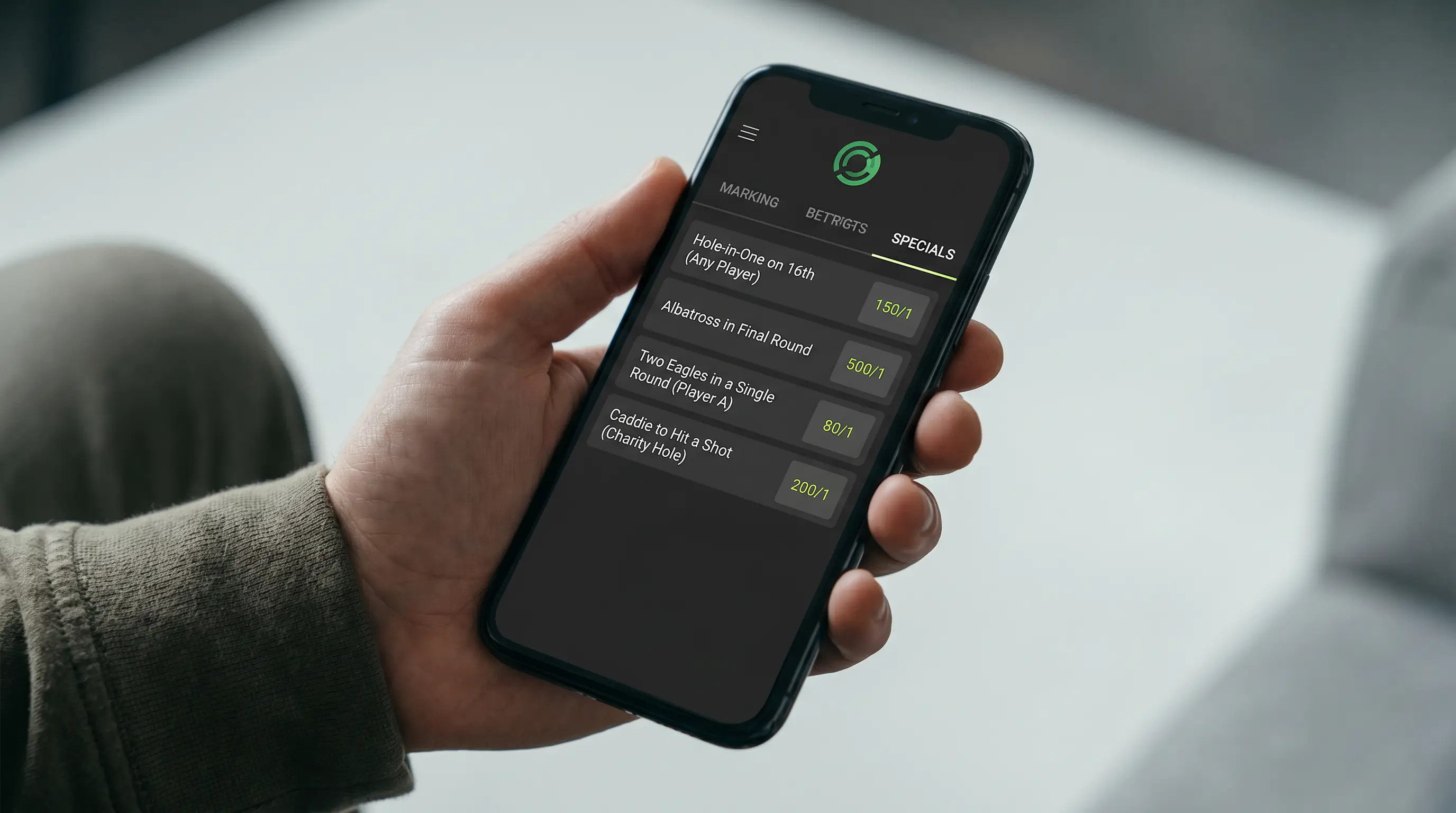
The pricing pattern is consistent across books. “Any albatross this tournament” runs 250/1 to 500/1 at the major-tournament specials, with the wider price during weeks where the host course has particularly reachable par-5s (Augusta’s 13 and 15, for instance, host more albatross attempts than any other par-5s on tour, and the market price reflects this with a tighter quote in Masters week).
Hole-specific albatross markets (“albatross on the 13th this tournament”) exist at one or two specialist operators and price at 60/1 to 150/1. The base rate on a specific par-5 across four rounds and 156 starters is approximately 1 in 1,600 — the 60/1 quote is therefore a 96 per cent margin. These are pure novelty bets.
Course-specific specials at events like The Open and the Masters get listed roughly 48 hours before tee-off and remain live throughout the tournament. The market suspends briefly when an albatross is being attempted on a televised group and re-opens after the ball comes to rest.
Expected Value on the Special: When the Maths Almost Works
The honest expected-value calculation for albatross markets at the more generous end of the pricing range is worth doing.
“Any albatross this tournament” at a major, priced at 500/1, against a true base rate of approximately 1 in 400. The expected value per £1 stake is (1/400) × 500 = £1.25 — a positive expected value of 25 per cent. At first glance, this looks like a profitable long-term bet.
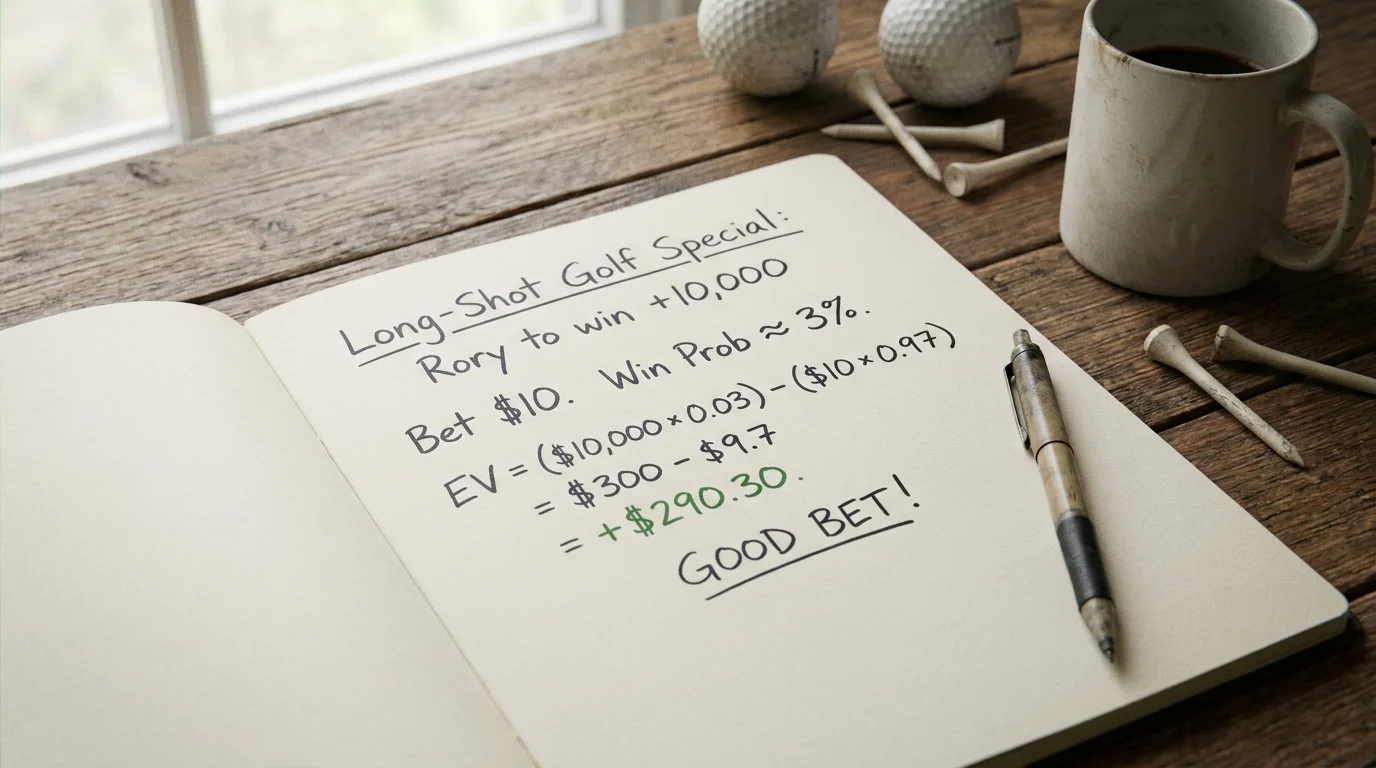
The catch is variance. To realise the 25 per cent positive expected value, you would need to place the bet across thousands of tournaments and absorb the variance of losing on roughly 399 out of every 400 tournaments. The bankroll required to survive that variance without ruin is approximately 200 times your stake, which for a £10 ticket means a £2,000 bankroll just for the albatross slot.
The realistic implementation for a UK punter is to place £1-2 tickets at the 400/1+ end of the price range at majors only, treat them as entertainment expense, and accept that the variance dominates the expected value across any realistic personal sample size.
For comparison, see the related hole-in-one calculations — the ace specials carry similar margin layers but the variance is much more manageable because aces happen at roughly half of all tournaments rather than once every 400.
The condor markets have no honest positive-expected-value entry. The base rate is too low, the displayed prices are too short, and the margin layer too wide. Treat condor markets purely as novelty bets at £0.50 stakes if you place them at all.
Has an albatross ever been recorded live at a UK-broadcast event?
Yes, multiple times. The Open and the BMW PGA at Wentworth have both broadcast albatrosses across the past decade. The live betting markets for ‘any albatross this tournament’ did pay out on these events at participating UK operators, though the timing of settlement varied by book.
How do operators settle ‘any albatross’ if it occurs in a void weather-suspended round?
The standard rule across most UK operators is that the albatross counts if it occurred in an official round that ultimately counted toward the tournament result. If the round is later voided by the tour, the operator’s terms typically void the special as well, with stake refunded.
