

 Available in US
Content
The Major That Repays UK Sleep More Than Any Other
The Open is the only major where I am awake for every televised shot of all four rounds. It is the home major, the time zone works, and the format that produces it — links golf in mid-July — is the format that delivers the most live-betting volatility per round of any major on the calendar. The 2025 Open at Royal Portrush paid $3.1 million to Scottie Scheffler at -17, from a $17 million prize fund, with the cut line guaranteeing $38,900 to every player who survived 36 holes. The numbers are large, but the live betting value sits in the wind, not in the purse.
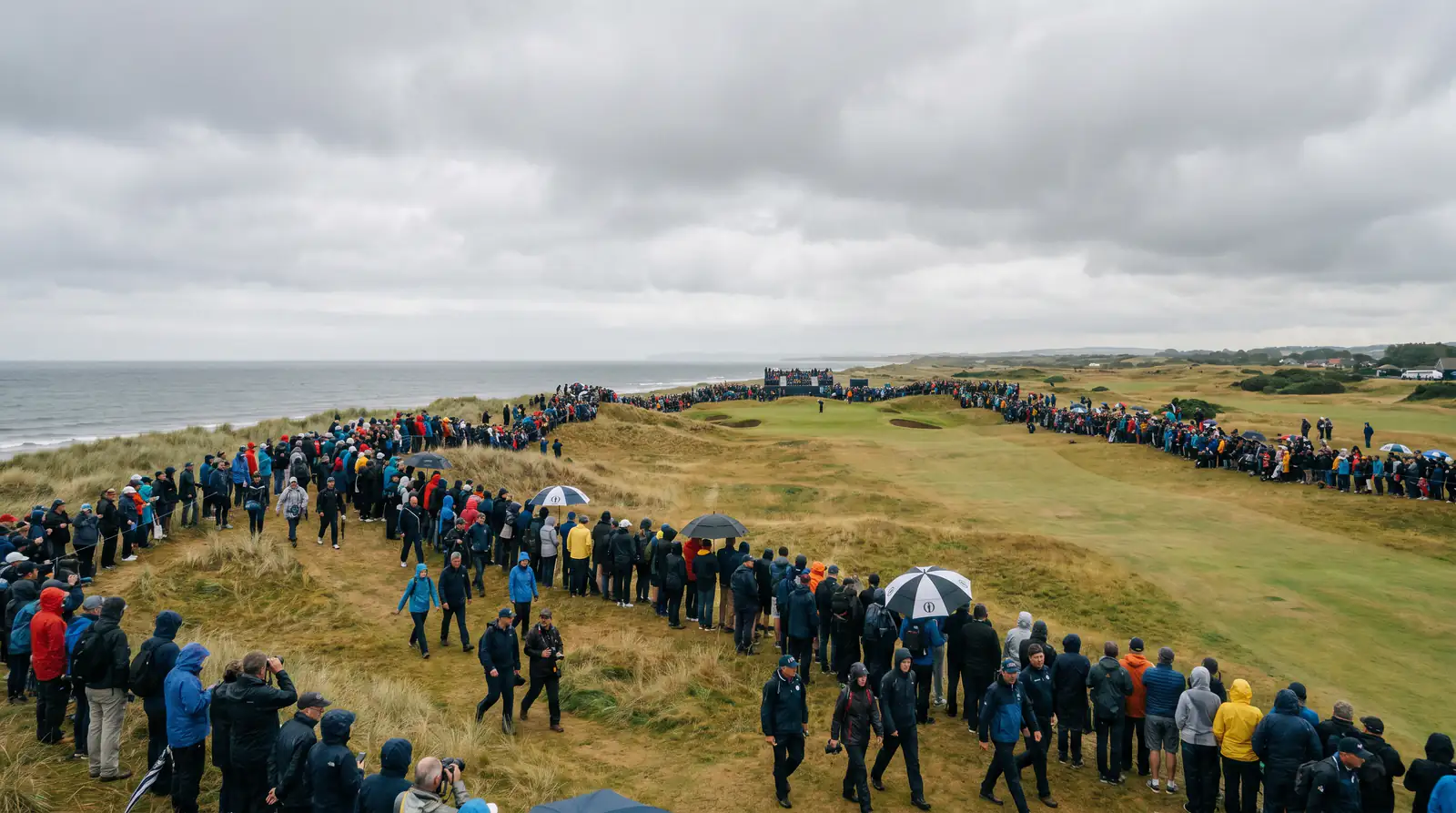
Links golf is a different sport from the parkland courses that host most of the year’s tour events. The ground is firm, the rough is variable, the wind is the dominant variable on every shot, and the par-3 holes can shift from genuine birdie chances to genuine bogey traps within a single morning. The live-betting consequence is that implied probabilities at The Open shift 20-30 per cent on weather alone, and the trading desks running these markets have to recalibrate constantly.
What follows is how I treat each of the four rounds, where the wave-and-draw bias lives, what the payout structure means for late-event live markets, and the historical pricing swings worth knowing before placing a Sunday afternoon ticket.
Links as an In-Play Variable
The fundamental difference between links and parkland live betting is that links scoring is wind-dependent and parkland scoring is mostly setup-dependent. A 30 mph crosswind on a links par-3 turns a 9-iron tee shot into a 6-iron tee shot, changes the carry-distance for every iron in the bag, and rewrites the implied probability of every player making birdie on every hole simultaneously.
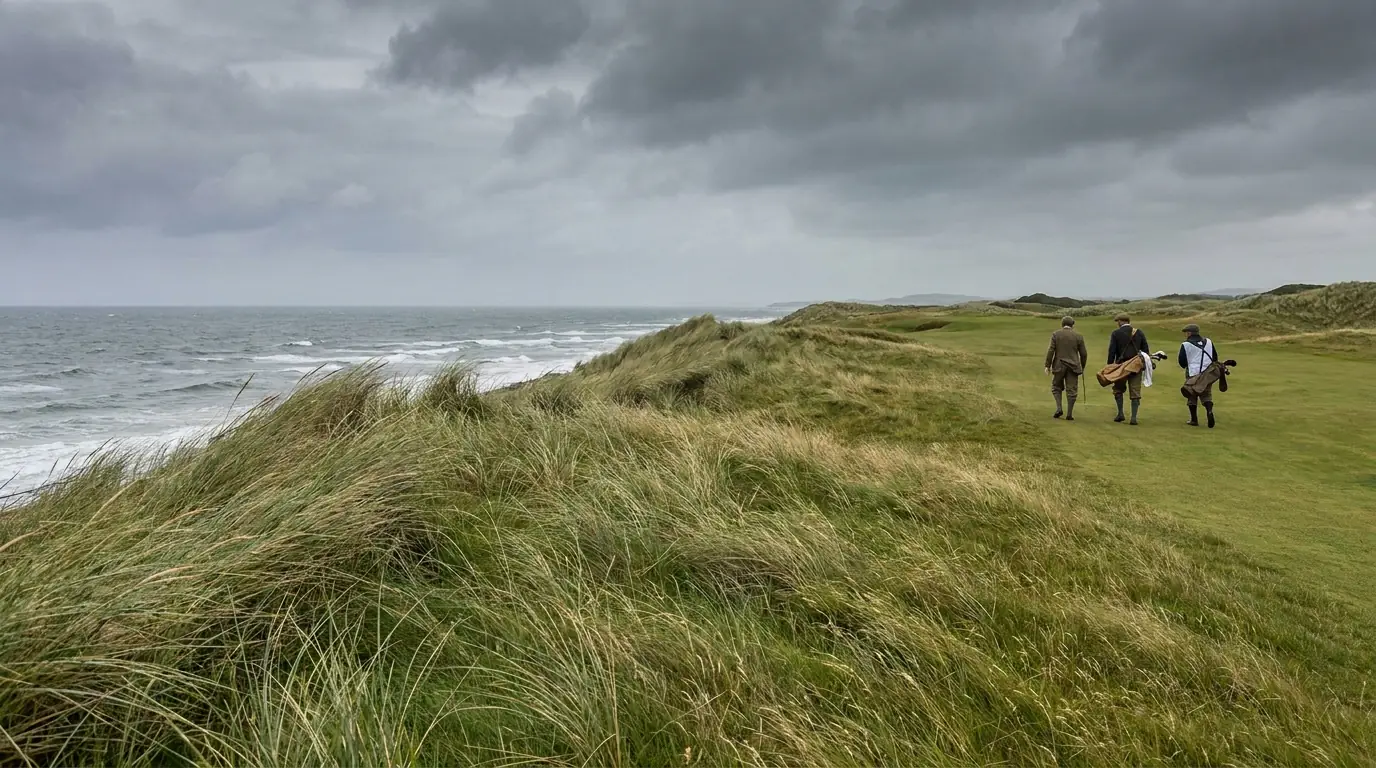
The UK has seen this dynamic intensify recently — Sporting Insights data showed 2025 produced a record number of rounds played in the country since their records began, up 14 per cent year on year. More UK golfers means more punters who understand what a links wind actually does, and the trading desks are pricing into a more informed audience than they were five years ago.
For the wind mechanics in detail — how prevailing wind, forecast accuracy, and gust windows interact with the live odds — the longer article on wind mechanics in detail covers the maths and the recurring patterns. For The Open specifically, the key wind variable is the prevailing direction at the host venue, which can flip the morning-afternoon advantage from one year to the next.
The other links-specific variable is the firmness of the fairways and greens, which evolves through the week. Monday-Tuesday practice rounds happen on relatively soft turf. By Saturday-Sunday, especially in a dry week, the fairways become bouncing surfaces that reward precision over distance. Players whose ball-striking is built around running fairway shots into firm greens gain through the week; players who rely on high-launch carry games lose ground.
Wave and Tee-Time Windows
The Thursday-Friday wave split at The Open is one of the most consequential in golf. Morning starters in round one tee off in the 6:35 am to 9:30 am window; afternoon starters tee off in the 11:00 am to 3:30 pm window. Round two reverses the wave assignment.

The wave bias at The Open has averaged 0.8 strokes per round between the two waves over recent seasons. That number swings widely year to year: in some years the morning wave gains 1.5 strokes; in others, the afternoon wave gains. The variable that decides is the wind forecast across the day, which the trading desks are reading from the same Met Office and BBC sources as the rest of us.
The live-betting consequence is that morning-wave players who post a good round have their afternoon counterparts repriced unfavourably for round two, when those afternoon players will tee off in the (typically) tougher afternoon conditions. The shift can be 30-50 per cent on outright and top-finish implied probabilities for an otherwise-similar player drawn into the wrong half.
The disciplined Open punter checks the wave assignment for every selection before placing any pre-tournament or early-Thursday live wager. The check takes 90 seconds on The R&A’s official tee-time page; the value it preserves can be the difference between a value bet and a junk one.
Payout Structure and the Cut
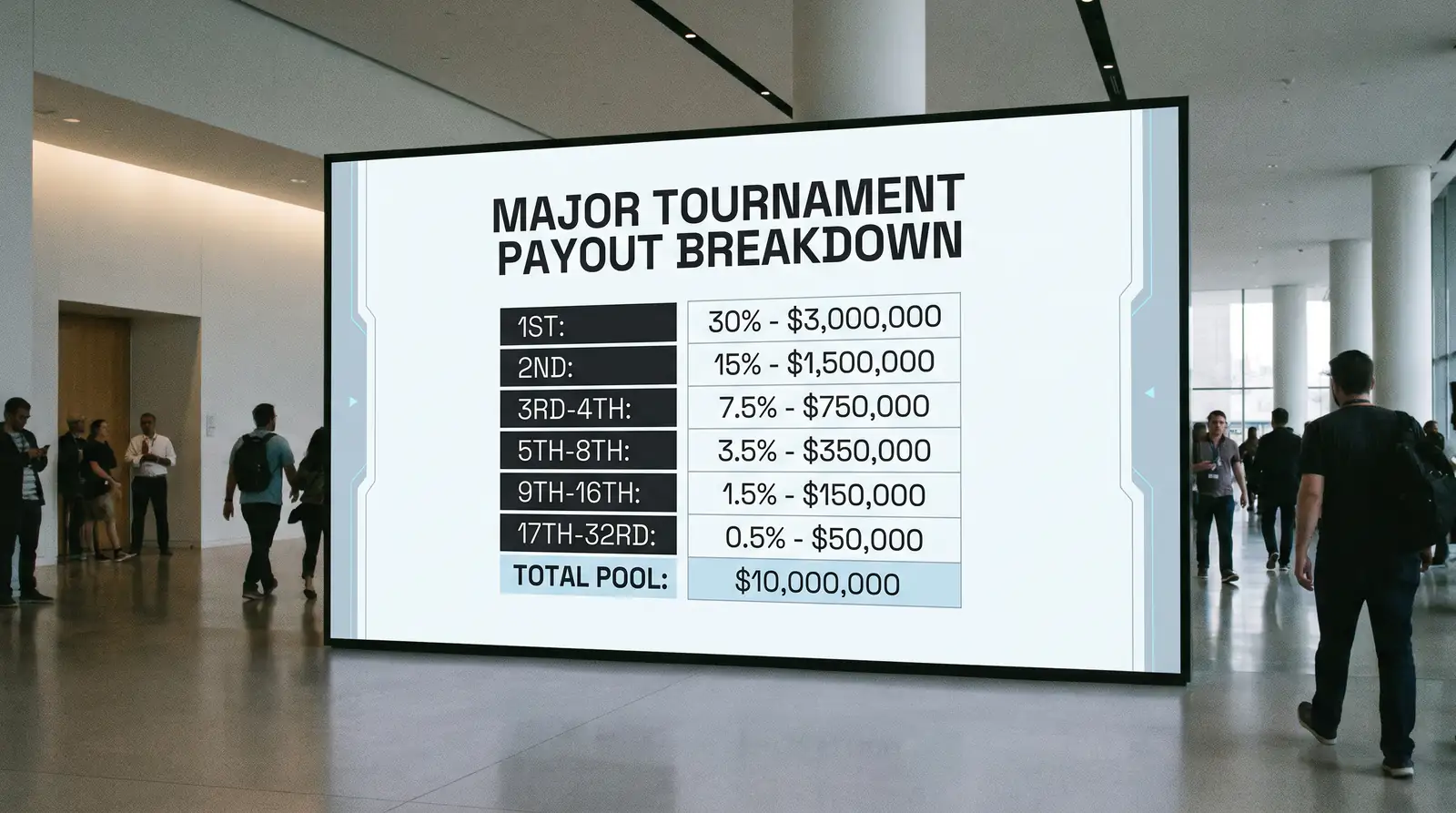
The 2025 Open’s $17 million purse with $3.1 million to the winner and $38,900 minimum to every player surviving 36 holes establishes the financial structure that shapes player behaviour through the week. The 70-and-ties cut line is more generous than the US Open’s top-60 or the PGA’s top-65, which means The Open’s Friday cut typically saves 70-75 players for the weekend versus 65-70 at the other majors.
For live betting, this larger cut field has two consequences. First, make-the-cut markets at The Open carry slightly tighter pricing because the threshold is more inclusive — the model needs less variance to confidently place borderline players inside the cut. Second, top-finish markets like top-20 and top-30 have higher dead-heat exposure because the larger weekend field clusters more tightly at the trailing positions.
The Open’s payout curve is steeper at the top than the other majors. The top-10 finishers at the 2025 event collected an average of $700,000+ each; the 30th-place finisher collected approximately $80,000; the cut survivors took the $38,900 minimum. The implication for live betting is that Sunday’s pricing at The Open emphasises top-5 and top-10 finishes heavily, because the financial stakes for the players in those positions are dramatically higher than for the chasing pack.
The R&A’s cut implementation includes the historical “10-shot rule” — any player within 10 shots of the lead makes the cut even if they fall outside the top 70. This is the most generous cut rule in modern golf and produces occasional anomalies where 80+ players make the weekend in years when the leader runs away early.
Historical In-Play Swings Worth Knowing
The most dramatic live-pricing swings at recent Opens have been driven by weather rather than by individual player runs. The 2025 final at Royal Portrush played out under generally benign conditions, with Scheffler controlling the tournament from Saturday onwards. When he lifted the Claret Jug, he summed up the underlying emotion: “It’s a pretty special feeling. I grew up waking up early to watch this tournament on TV. It’s pretty cool to be sitting here with the trophy. It’s hard to put into words.”
The pricing on that Sunday afternoon told its own story. Scheffler entered Sunday at -10 with a four-shot lead. His live outright price tightened from around 1.30 decimal at tee-off to 1.05 by the front-nine completion, then settled to effectively 1.02 by the back-nine turn. The implied probability moved from 77 per cent at the start of the day to 98 per cent by the time he reached the 15th tee.
Compare that to the 2019 Open at Royal Portrush, where Shane Lowry led by four entering Sunday and saw his live price tighten similarly. Both events demonstrate a recurring Open pattern: when the leader is clearly the strongest ball-striker in the field on the day, the live market does not allow much room for shocks unless weather intervenes.
The reverse pattern — Sunday charges from outside the top 5 — is rarer at The Open than at the other majors. Links courses produce volatility within a round but rarely 6-shot weekend comebacks. The Sunday afternoon live “outside chance” prices on players at -8 chasing a leader at -12 typically sit at 25/1 to 40/1, against true probabilities closer to 30/1 — honest pricing in most years, occasional value when weather is forecast to deteriorate.
How does morning vs afternoon Thursday draw shift live Open odds?
The Thursday-Friday wave split at The Open has averaged 0.8 strokes per round between the morning and afternoon waves over recent years. That translates to a 30-50 per cent shift in implied probability for otherwise-identical players drawn into the favourable vs unfavourable half. The market does not always price wave bias efficiently, especially when overnight forecasts shift.
Which UK operators stream The Open natively in their live betting interface?
Several major UK operators offer live streaming of The Open subject to active account and minimum-stake requirements that vary by operator. The streaming rights are negotiated with the BBC and Sky Sports rights-holders annually, so the list of operators with live streaming changes year to year — check the operator’s tournament-specific page in the week of the event.
