

 Available in US
Content
The Tour That Trades While the UK Is Awake
The single biggest practical difference between the DP World Tour and the PGA Tour for UK live punters is timing. PGA Tour Sunday afternoons are 8 pm to 1 am UK time on standard broadcasts — late nights, tired eyes, decisions that should have been made hours earlier. DP World Tour Sunday afternoons are 10 am to 5 pm UK time at most European venues, with afternoon and evening windows in the Middle East and Asia events. The trading windows align with normal European waking hours, and that alone changes how a UK punter can actually approach the markets.
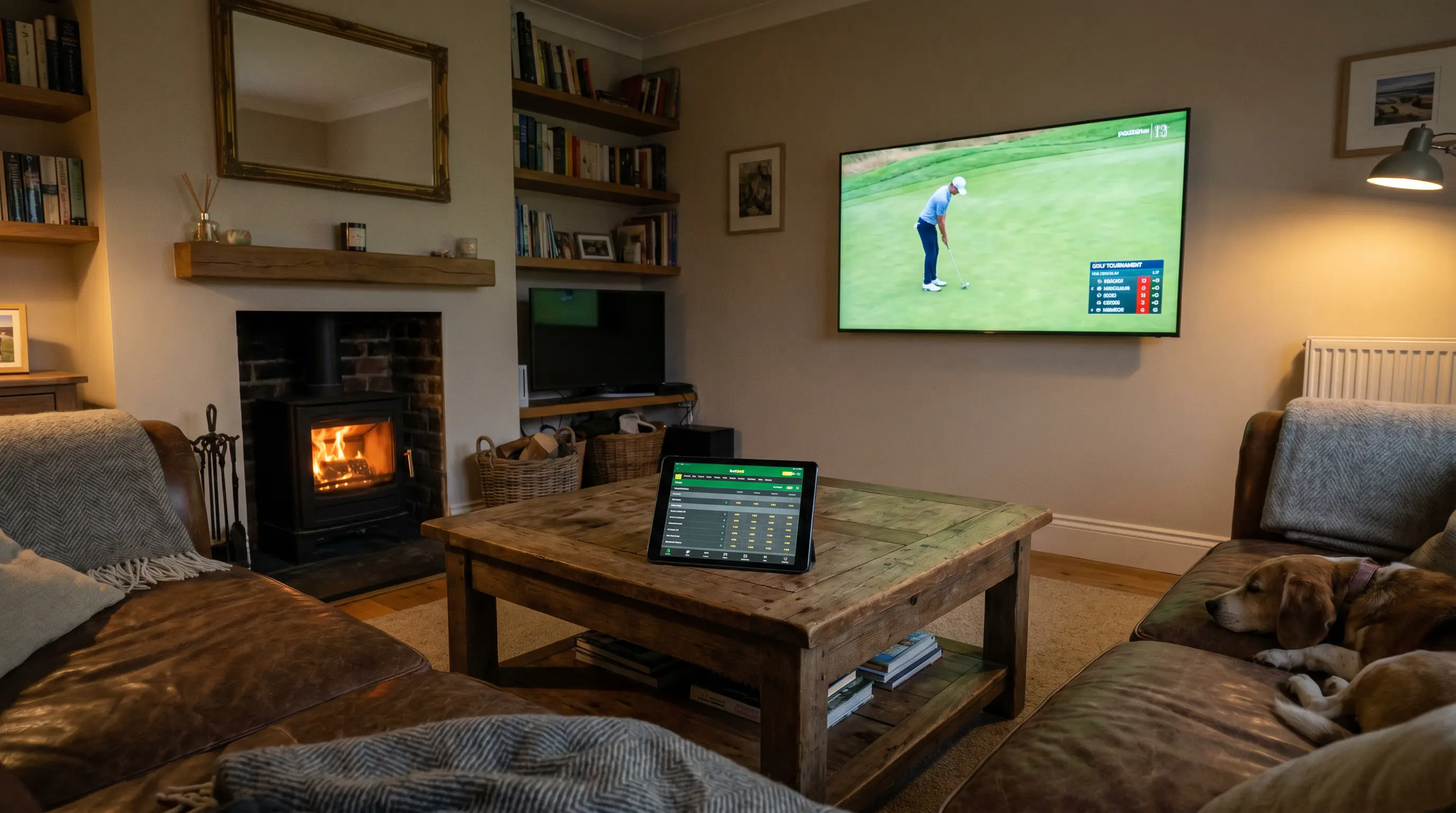
The DP World Tour played 42 tournaments across 26 countries in 2025, with peak Sky Sports viewing up 13 per cent on the previous year and attendance up 7 per cent. The final 11 events of the season delivered +35 per cent growth on Golf Channel and +16 per cent on Sky, indicating an end-of-season audience that was paying close attention. For UK live golf bettors, this growing engagement means the market depth on DP World Tour events has expanded meaningfully over the past three seasons, and the trading spreads have tightened accordingly.
What follows is how the tour’s calendar shape affects UK trading windows, where the Rolex Series sits in pricing terms, how the live market depth compares to the PGA Tour, and what the Race to Dubai standings market actually looks like during the final event.
Tour Shape and the UK TV Window
The DP World Tour’s 42-event 2025 calendar covered 26 countries spread across Europe, the Middle East, Africa, and Asia, with key dates including the Dubai Desert Classic, the BMW PGA Championship at Wentworth, the Scottish Open, and the season-ending DP World Tour Championship in Dubai. The geographic spread means UK live betting windows vary materially by venue.

European events (Spain, Italy, France, Scotland, England, Ireland) play through the UK afternoon and early evening — roughly 8 am to 6 pm UK time for the four-round event, with Sunday’s leaders finishing between 4 pm and 5 pm. These windows are ideal for UK live betting because the prime viewing hours overlap with the late stages of the round.
Middle Eastern events (Dubai, Abu Dhabi, Saudi Arabia) play with a 3-4 hour time advance on UK time, putting Sunday’s final-group action in the late morning to early afternoon UK window. Asian events (Singapore, India, China) play further ahead, finishing during the UK breakfast window.
The trading desks at UK operators adjust their staffing patterns to follow the calendar. European events get full-desk staffing through Sunday afternoon. Middle Eastern events get staffing through Sunday lunchtime. Asian events get reduced staffing through the relevant overlap window. The implication for live punters is that market depth and price quality are highest on the Sunday afternoons of European events and lowest on the Sunday breakfasts of Asian events. Knowing which calendar your week sits on changes what trading strategy makes sense.
Rolex Series Pricing
The Rolex Series is the DP World Tour’s premium category of events, currently including (in 2026) the Dubai Desert Classic, the Hero Dubai Desert Classic, the BMW International Open, the Scottish Open, the BMW PGA Championship, and a handful of others depending on the year’s calendar. These events attract stronger fields than ordinary DP World Tour stops, often pulling in 30-40 names ranked inside the world top 100 and several inside the top 30.

Why are Rolex Series live spreads tighter than ordinary DP World Tour events? Because the volumes are higher, the trading-desk staffing is full, and the public-side action is more sophisticated. The Rolex Series attracts UK and European punters who follow the tour closely, and the result is a market where the displayed prices are closer to honest implied probability than at the smaller events.
The pricing pattern across the season: Rolex Series outright margins run 5-7 per cent total across the field, against 7-10 per cent at ordinary DP World Tour events. Live H2H matchup margins run 3-4 per cent on Rolex Series matchups, against 5-7 per cent at ordinary events.
This is where course form is the only signal that follows the field across continents consistently — the DP World Tour visits a wider geographic range of venues than the PGA Tour, and course-fit reads carry more weight in pricing than recent-form reads when the tour moves from a European parkland event to a Middle Eastern desert layout to a Far East humid setup within consecutive weeks.
Live Market Depth vs the PGA Tour
The DP World Tour live market depth at UK operators is materially shallower than the PGA Tour. The UK remote betting market generates around £2.6 billion in gross gambling yield annually, and the share that flows through DP World Tour live events represents perhaps 10-15 per cent of the equivalent PGA Tour share at most major operators.

The thinner depth has direct trading implications. Maximum-stake limits on DP World Tour outright markets are typically 30-40 per cent of the equivalent PGA Tour limits at the same operator. Maximum-stake limits on H2H matchups and three-balls are similarly reduced. The 30-40 second rejection window for “this stake exceeds market liquidity” applies more frequently at DP World Tour events.
The trade-off is that the thinner depth produces wider mispricings on niche markets. A specific top-20 finish on a player whose Strokes Gained: Approach numbers are running 0.4 strokes per round above his pre-event baseline might be available at +700 implied 12.5 per cent against a true probability of 17-18 per cent. The same player at a similarly-sized PGA Tour event would be priced closer to +450 implied 18 per cent. The DP World Tour’s slower-to-adjust pricing rewards punters who can act on weekly form data faster than the model.
The disciplined approach is to size positions appropriately for the lower limits and to spread tickets across multiple DP World Tour markets rather than concentrating on one big read. The expected-value edge per ticket is higher; the per-event total profit ceiling is lower.
Race to Dubai Live
The Race to Dubai is the DP World Tour’s season-long points race, with the season-ending Tour Championship in Dubai determining the year’s overall winner. Going into the 2026 season, the tour’s chief executive Guy Kinnings framed the storylines with notable confidence: “After a season full of incredible storylines and history making achievements — notably our Race to Dubai Champion Rory McIlroy winning the career Grand Slam, and a historic win for Team Europe at the Ryder Cup in New York — we start our 2026 season next week in Australia with exceptional momentum.”
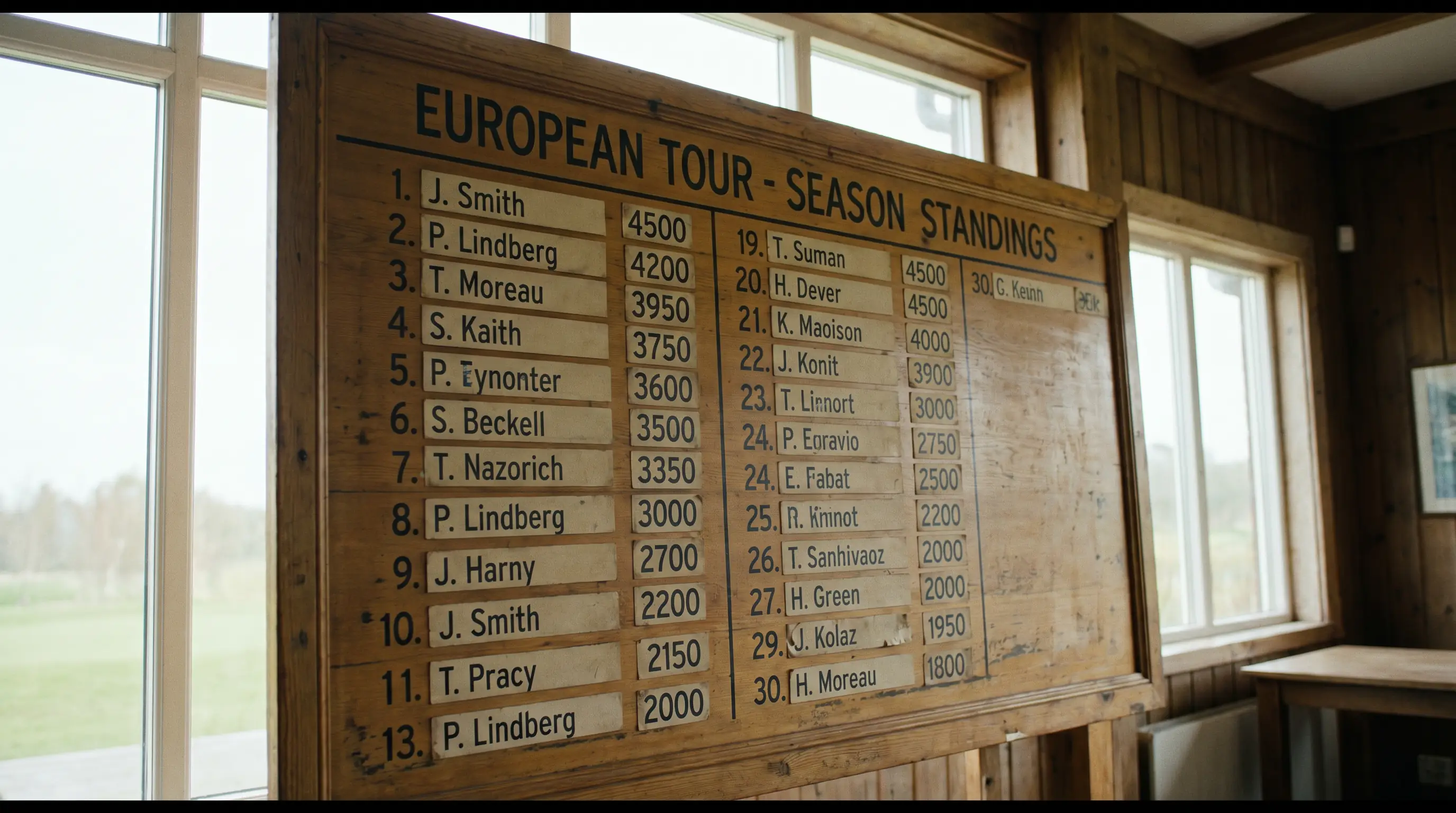
That momentum is reflected in the live Race to Dubai pricing during the year’s final event. The season-long standings going into the final event create a points-aware live model: a player needs to finish in a specific position at the final event to overtake the current leader, and the live pricing on “Race to Dubai winner” derives from the joint probability of the final-event finish position and the current leader’s finish position.
Does the Race to Dubai standings have a live market during the final event? Yes, at most major UK operators. The market is typically priced from the final-event live outright market combined with a points-conversion model that the trading desk maintains throughout the week. The prices update after every completed hole for every relevant player.
The trading windows that matter most: pre-event Tuesday/Wednesday when the points-conversion model is fresh and the prices most accurately reflect the actual probabilities, and Sunday’s front nine when the live outright market for the final event is most informative about the eventual finish positions. Saturday afternoon entries tend to be poorly timed because the model has not yet calibrated to the leaderboard shifts that Sunday will produce.
Does the Race to Dubai standings have a live market during the final event?
Yes, at most major UK operators. The market is priced from the final-event live outright market combined with a points-conversion model, and prices update after every completed hole for every relevant player. The best entry windows tend to be pre-event Tuesday-Wednesday and Sunday’s front nine.
Why are Rolex Series live spreads tighter than ordinary DP World Tour events?
Higher volumes, full trading-desk staffing, and more sophisticated public-side action. Rolex Series outright margins typically run 5-7 per cent total, against 7-10 per cent at ordinary DP World Tour events. The Rolex Series markets are closer to honest implied probability and reward sharp reads less generously, but also penalise loose reads less harshly.
