
 Available in US
Content
The Stat That Has Shifted More Than Any Other in Five Years
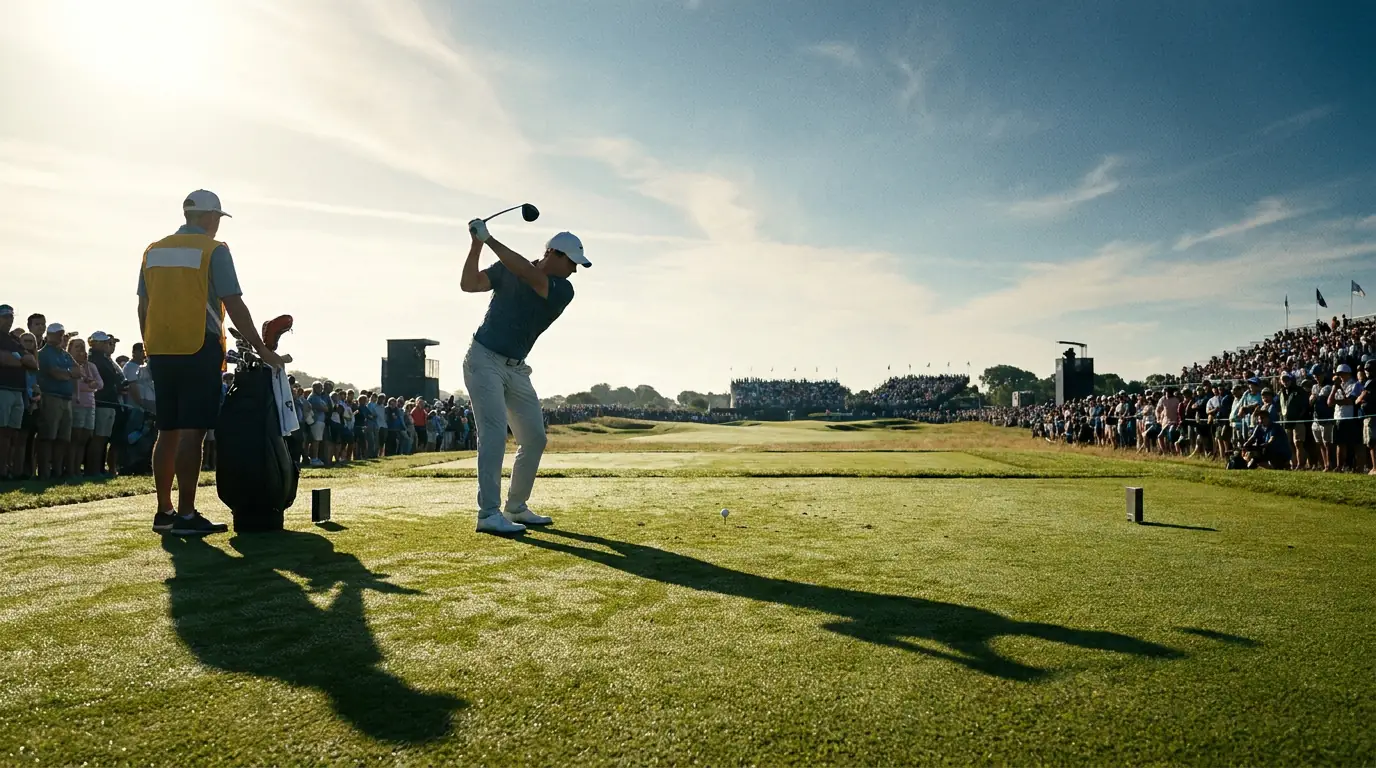
If you handed me a tour-pro driving-distance number from 2018 and asked me to read it without context, I would underestimate the player’s competitive standing by something like 8-12 spots in the world rankings. The number that read as “long” five years ago reads as “medium” today. The PGA Tour’s 2025 driving distance average reached 303 to 304 yards, with leaders like Aldrich Potgieter pushing 327+ and the tour average growing 5-7 yards per year. The shift is not gradual; it is structural, and live betting models that have not updated their distance baselines are systematically mispricing distance-driven outcomes.

Distance off the tee is not the dominant metric in modern professional golf — SG: Approach matters more, and SG: Tee-to-Green captures the combined effect of driving and iron play. But distance still matters, particularly at certain types of venue, and the gap between elite bombers and tour-average hitters has widened over the past five years to the point where it shapes meaningful market opportunities.
What follows is the current distance baseline and what it means for pricing, where on the calendar distance actually converts into wins, the specific live markets where the distance edge is most exploitable, and the venues where being long off the tee becomes a liability rather than an asset.
The 2025 Distance Baseline
The PGA Tour’s 2025 driving distance leaderboard tells the story in numbers. The tour average sat at 303 to 304 yards, up 5-7 yards from the 2024 average. The top of the leaderboard (Aldrich Potgieter and a handful of others) cleared 327+ yards routinely. The 50th-ranked driver averaged 305-306 yards, and the 100th-ranked averaged 296-298 yards. Five years earlier (2020), the tour average sat at roughly 295 yards, with the leaders at 315 and the 100th-ranked at 285.
The +5-7 yards year-on-year growth is partly equipment-driven (modern drivers and ball technology continue to evolve within the regulatory limits), partly technique-driven (younger players have grown up with swing-speed-first instruction), and partly fitness-driven (tour pros now train for explosive power in ways that were uncommon a decade ago). Whatever the cause, the shift is real and it is compounding.
For live betting purposes, the implication is that distance-based skill profiles need to be read against the current baseline, not against historical norms. A player who averaged 310 yards in 2020 was a clear bomber. The same player at 310 yards in 2025 is merely above-average. The advantage they once held over the field has eroded into the field’s median, and their tour finishing positions have likely moved accordingly.

The trading desks at major UK operators update their distance baselines continuously, but the public-facing market often anchors on names rather than numbers. Players who were known as bombers in 2020 still carry a public-side bomber association in 2025, even when their current numbers no longer support it. That gap is one of the more reliable live-pricing inefficiencies on PGA Tour events.
Where Distance Actually Converts
Distance does not convert equally at every venue. The R&A’s global participation data shows 108 million people engage with golf in some form, of whom 43.3 million play 9 or 18 holes on a course — but the venues those amateurs play do not look like the venues professional bomber profiles thrive at. The professional distance edge converts most reliably at four specific course profiles.

First: courses with multiple par-5 holes reachable in two for elite drivers. Augusta’s 13 and 15, TPC Sawgrass’s 16, Bay Hill’s 16, multiple holes at Riviera and Quail Hollow. At these venues, the bomber gains 0.2-0.4 strokes per round against the field on par-5 scoring alone, simply by accessing the green in regulation more often.
Second: courses with driveable par-4s. Most major tour venues have at least one driveable par-4 (the 17th at Sawgrass, the 10th at Riviera, the 7th at Pebble in firm conditions). The bomber’s expected score on these holes is roughly 0.15-0.25 strokes lower than the field average.
Third: courses where rough penalties for missed fairways are mild. The bomber’s typical trade-off — more distance, less accuracy — only converts to wins when the cost of missing the fairway is manageable. Augusta’s rough is forgiving by major-championship standards; the bomber profile thrives. The US Open’s rough is severe; the bomber profile struggles.
Fourth: courses where the field’s iron-play distribution skews longer because of the fewer remaining par-5 attempts after a short hitter. Long courses force shorter hitters to attack from longer second shots, which compresses the field’s SG: Approach numbers and amplifies the bomber’s relative advantage.
Live Par-5 Reach Markets
The most directly tradable distance-driven live market is the par-5 reach market — specifically the “made/missed green in regulation on hole X” props that appear at major UK operators during high-profile events.

The pre-event implied probability of a green in regulation on a 555-yard par-5 (reachable in two for elite distance hitters) is approximately 55-60 per cent for a tour-average field. For an elite distance hitter (327+ yards driving), the implied probability rises to 70-78 per cent. The 15-18 percentage point gap is the bomber’s structural advantage on the specific hole.
The live “GIR on hole X” markets at most operators price these probabilities at small implied margins (3-5 per cent per side), which means the bomber-versus-field comparison can be priced cleanly enough to identify value. The pattern in my notes is that the trading desks generally price bombers’ GIR probabilities accurately, but the more interesting opportunity is in the 3-ball context.
This is where 3-balls become friendlier with a known bomber — a group containing one elite distance hitter and two tour-average drivers on a par-5-heavy course has a structurally lopsided implied probability that the 3-ball market does not always fully capture. The bomber’s expected score advantage of 0.4-0.7 strokes per round against the others in the group, on a course favouring distance, often produces 3-ball prices 1-2 ticks longer than the underlying probability warrants.
Where Distance Becomes a Liability
Distance is not universally an asset. At three specific venue types, distance becomes a liability rather than an edge.
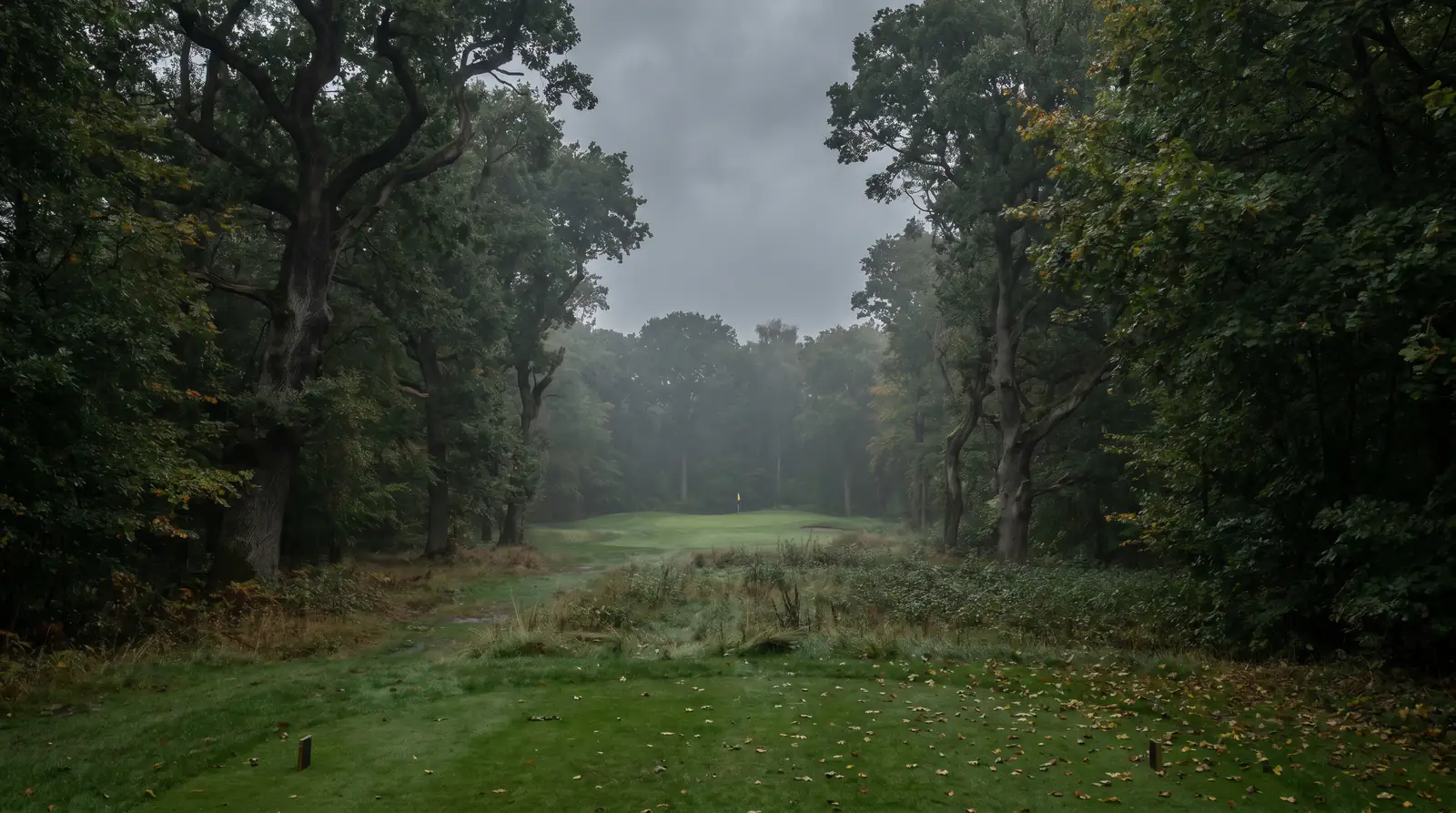
First: US Open setups with severe rough. The USGA’s setup philosophy specifically targets the bomber profile by penalising missed fairways with thick primary rough and narrowing fairway widths. A 320-yard drive that lands 5 yards off the centreline at the US Open often produces a bogey or worse, while a 290-yard drive on the fairway produces a manageable par. The aggression that distance enables becomes the source of disaster.
Second: links courses in firm and windy conditions. The Open Championship at sites like Royal Liverpool and Royal St George’s rewards the ground game — running fairway shots into firm greens — rather than the carry game. A bomber’s tee shot that releases through the fairway into rough is a worse outcome than a shorter hitter’s tee shot that holds the fairway.
Third: tight parkland venues with tree-lined fairways and small greens. Pebble Beach, Harbour Town at the RBC Heritage, several Korn Ferry venues. The reward for distance is small (greens are not appreciably easier to hit from 8-iron than from pitching wedge on small greens), while the punishment for a misdirected long drive is severe.
At what hole length does distance stop mattering for live odds? My approximate read: par-4 holes shorter than 410 yards, distance is essentially irrelevant for elite professional outcomes; 410-460 yards, distance provides modest advantage; 460-510 yards, distance produces meaningful advantage; 510+ yards (a long par-4 or short par-5), the distance edge is at its maximum. Par-5 holes below 530 yards play similarly to long par-4s; par-5 holes 575+ yards reward maximum distance and produce the most lopsided GIR probability splits.
Does driving distance correlate with live make-the-cut value?
Weakly and venue-dependently. At distance-rewarding venues (long par-5s, mild rough), elite distance hitters’ live MTC probabilities are typically slightly underpriced because the public-side market reads MTC as a function of accuracy rather than power. At distance-penalising venues (US Open setups, links courses), the opposite pattern can apply.
At what hole length does distance stop mattering for live odds?
Par-4 holes shorter than 410 yards: distance is essentially irrelevant for elite professional outcomes. 410-460 yards: modest advantage. 460-510 yards: meaningful advantage. 510+ yards: the distance edge is at its maximum. Par-5 holes below 530 yards play like long par-4s; par-5 holes 575+ yards reward maximum distance heavily.
