

 Available in US
Content
The Variable Most UK Punters Have Never Heard Of
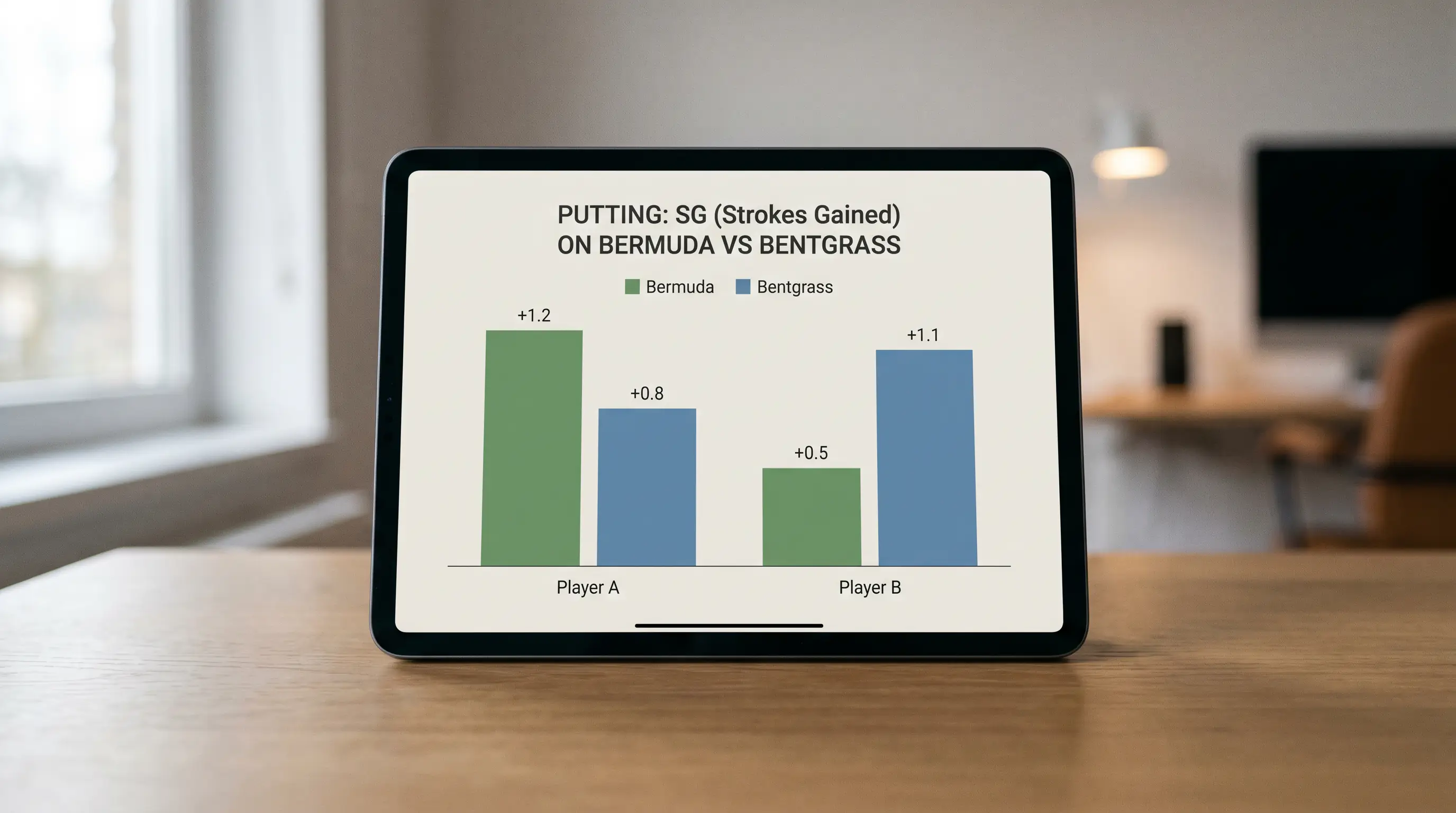
Putting-surface specialism is one of those golf-betting insights that sounds esoteric until you start tracking it. Then you cannot un-see it. Specific players gain 0.4-0.6 strokes per round on bentgrass and lose 0.2-0.4 on Bermuda. Other players have the opposite split. The trading desks at the major UK operators track these splits explicitly in their live pricing models, and the public-facing markets sometimes reflect the splits and sometimes do not. The gap is where the value lives.
The 2025 PGA Tour driving-distance average sat at 303 to 304 yards as a baseline, with the upper end of the field at 327+ yards. That distance distribution gives you context for course-setup decisions — long courses tend to be designed around bentgrass greens because the cooler climates that grow bentgrass also produce the firmer fairway conditions distance hitters thrive on. Shorter courses, especially in the American South, tend toward Bermuda. The grass type is partly a climate decision but partly a strategic-design one, and the two surfaces play measurably differently under the putter.
What follows is the physical difference between the two surfaces, which tournaments use each, the players whose career splits are large enough to factor into live betting, and the specific live-implications for SG: Putting reads.
Physical Difference on the Ball
Bermuda grass is a warm-season turf that grows in a granular, grain-directional pattern. The grain — the direction the grass blades lean — directly affects ball roll. A putt rolled against the grain takes about 5-7 per cent more effort to reach the hole than the same putt rolled with the grain, and the perceived “speed” of a green can vary by hole and by time of day as the grain shifts with sun exposure and afternoon mowing.

Bentgrass, by contrast, is a cool-season turf that grows upright in a near-uniform pattern. The grain effect is minimal — putts roll close to the same speed in every direction. Reads on bentgrass become almost purely a function of slope and putt distance, without grain adjustments.
The implication for putting performance is that Bermuda greens require a more developed grain read, while bentgrass greens require a more precise slope read. Players who grew up putting on Bermuda (predominantly American Southern players) tend to have stronger grain skills. Players who developed on bentgrass (most European Tour players, US Northern and Western players) tend to have stronger pure-slope skills.
The two skills are independently developed and the cross-over is imperfect. A bentgrass specialist transplanted to Bermuda greens often loses 0.2-0.5 strokes per round in their SG: Putting compared to their bentgrass average, even after years of trying to adapt. The reverse pattern is equally common. The career-long splits across a player’s PGA Tour data tell the story unambiguously.
Which Tournaments Use Each
The tournament calendar splits roughly into Bermuda venues, bentgrass venues, and a small set of poa annua venues that behave as a third category. Bermuda venues are concentrated in the American South and Southeast, including the Players Championship (TPC Sawgrass), the Honda Classic (PGA National), the Cognizant Classic, and several Florida swing events. Major championships at Bermuda venues are rarer — the PGA Championship occasionally rotates to Bermuda hosts, but the four majors lean bentgrass.
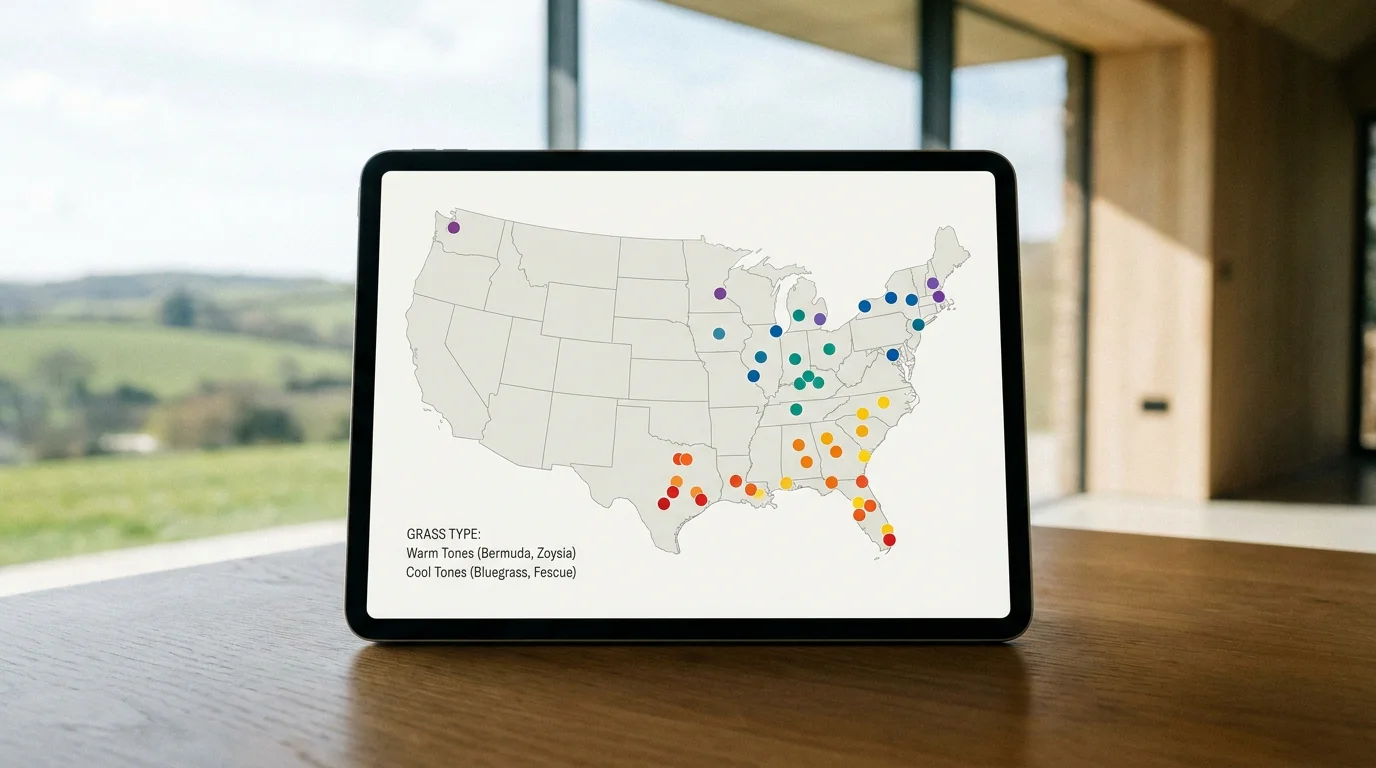
Bentgrass venues are concentrated in the American Northeast, Midwest, and Pacific Northwest, including most US Open venues (Pebble Beach, Pinehurst, Oakmont, Shinnecock), the Masters at Augusta (uses bentgrass over Bermuda base), and the season-ending Tour Championship at East Lake. Most of the major championships from the Players forward use bentgrass.
Poa annua venues — Riviera, Torrey Pines (South), and a handful of West Coast stops — behave as a third category in live putting odds. Poa annua is technically a separate grass from both bentgrass and Bermuda, and its surface character is distinctive enough that career splits on poa annua are tracked separately by the more sophisticated trading desks.
Are poa annua greens treated as a third category for live putting odds? At the larger UK operators, yes — the live pricing models maintain separate career-split data for poa annua players, particularly relevant during the West Coast swing in January-February. At smaller operators, poa annua is sometimes lumped into the bentgrass category, which produces small but exploitable mispricing on West Coast events.
Players with Strong Surface Splits
The career-split data the trading desks track for major tour pros typically requires 50+ rounds on each surface to be statistically meaningful. Players with sufficient data on both surfaces (most established tour pros) have splits ranging from 0.05 strokes per round (essentially no surface effect) to 0.7 strokes per round (a meaningful surface specialist).
Scottie Scheffler in 2025 led the PGA Tour in SG: Approach, SG: Tee-to-Green, and Greens in Regulation, with a birdie-or-better rate of 25.78 per cent. His career SG: Putting splits between bentgrass and Bermuda are within 0.1 strokes per round — he is essentially surface-agnostic, which is part of why his pricing across the full calendar remains consistent across venues. Surface specialists, by contrast, see their live prices fluctuate week-to-week based on whether the venue suits them.
The most actionable splits tend to be in the mid-tier of the field. A player who ranks top-40 in SG: Putting season-long but has a +0.4 stroke advantage on Bermuda relative to bentgrass is genuinely top-15 SG: Putting at Bermuda venues — and the live MTC and top-finish pricing at those events often underweights this split because the public-facing season-long stats do not reflect it.
Course form pairs with surface splits to refine the shortlist — a player who has both a strong Bermuda split and three top-20 finishes at the specific venue over the past five years is a substantially stronger pick than season-long stats alone would suggest. The combination of surface and venue-specific data produces a sharper read than either signal in isolation.
Live Implications on SG: Putting
The live implications for SG: Putting reads at a venue with a clear grass type are several. First, the within-tournament SG: Putting numbers update against a field average that reflects the surface — meaning a player who is +1.5 SG: Putting at a Bermuda venue is doing so against a field that includes Bermuda specialists, so the achievement is more notable than the same +1.5 at a bentgrass venue against a field of bentgrass specialists.

Why do Tour Championship live odds favour bentgrass-strong putters? Because East Lake uses bentgrass, and the season-end field is concentrated heavily on names whose career data lets the trading desks compute reliable surface splits. The model weights bentgrass-strong putters’ implied probabilities slightly upward at East Lake, and the pre-tournament prices typically reflect this — a player ranked top-15 in bentgrass-specific SG: Putting can price 1-2 ticks shorter at East Lake than their season-long ranking would suggest.
Second, the SG: Putting deterioration of a surface-mismatched player tends to compound across rounds. A bentgrass specialist at a Bermuda venue who is -0.5 SG: Putting through round one is more likely to be -0.7 through round two than the round-to-round correlation of 0.15-0.25 for the metric would suggest, because the underlying surface mismatch persists across all four rounds. The trading models adjust for this, but the public-facing markets often do not.
Third, the implied probability of “best putting round of the day” at any specific tournament correlates more heavily with surface specialism than the season-long rankings imply. A bet on the day’s best SG: Putting performance often pays better at the surface-matched specialist than the season-long SG: Putting leader, even when the leader’s headline price looks shorter.
Are poa annua greens treated as a third category for live putting odds?
At the larger UK operators, yes. Poa annua surface is distinctive enough that career splits on poa are tracked separately, particularly relevant for the West Coast swing in January-February at venues like Riviera and Torrey Pines South. Smaller operators sometimes lump poa into the bentgrass category, which produces small mispricings on West Coast events.
Why do Tour Championship live odds favour bentgrass-strong putters?
East Lake uses bentgrass, and the 30-player Tour Championship field is concentrated on names whose career data lets the trading desks compute reliable surface splits. Bentgrass-strong putters’ implied probabilities are weighted slightly upward at East Lake, with their pre-event prices typically reflecting this — a player ranked top-15 in bentgrass-specific SG: Putting can price 1-2 ticks shorter than season-long ranking would suggest.
